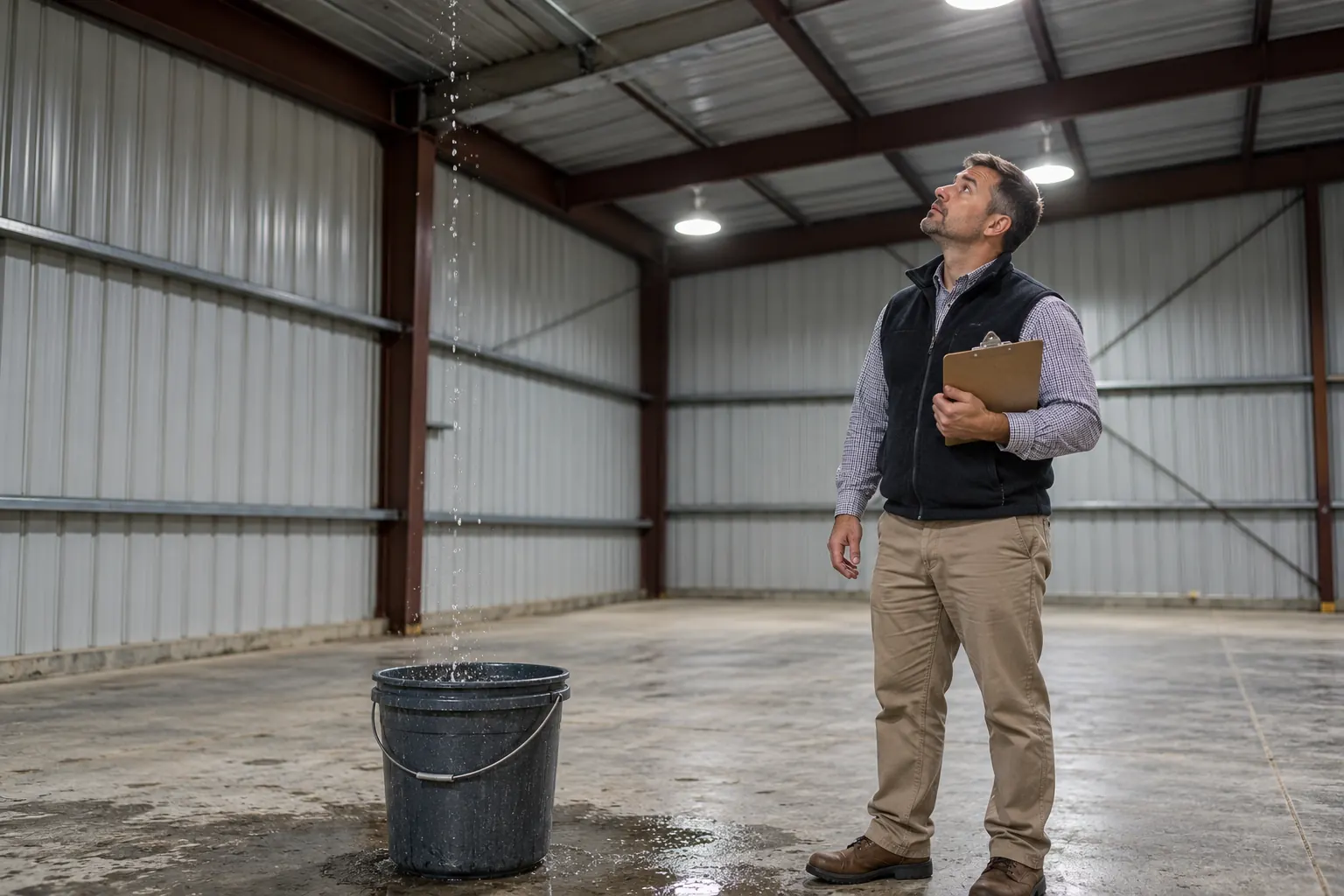
Water stain and drip from a roof leak inside a commercial building
Roof Coating FAQ

Jeffersontown Metal Roof Coating Questions

Straight answers about metal roof coating in Jeffersontown: rust, screws, laps, coating choices, weather, costs, taxes, and permits in each nearby town.

About These Answers

Metal Roof Coating In Jeffersontown, Explained

Metal roof coating is a liquid-applied membrane, sprayed or rolled over steel roof panels, that seals fasteners, laps and seams and shields the metal from rust.

Jeffersontown Metal Roof Coating coats commercial metal roofs and applies silicone, acrylic, spray foam and shingle roof coatings in Jeffersontown and nearby towns across Jefferson County, Kentucky.

Have A Question About Your Own Roof?

Call us and describe what you see on the roof or the ceiling below it. We will answer it or set up a roof walk.

Call Us

Metal Roof Coating Basics

What does a coating do for a commercial metal roof?

A coating lays one continuous rubber-like layer over the panels, fastener heads and laps, so rain meets a single surface instead of hundreds of joints. On a steel building, most leaks start at screws with cracked washers, at end laps where panels overlap, and around skylight panels.

The coating bridges those joints after they are cleaned, treated and sealed. It also keeps moisture off the steel, which slows red rust. A white or light gray topcoat reflects sunlight and keeps the panel surface cooler on summer afternoons.

Coatings protect metal that still carries weight. Panels rusted through or a bent purlin need repair first.

Which commercial metal roofs are good candidates for coating?

Exposed-fastener R-panel and PBR roofs with surface rust and loose screws are the most common candidates, followed by standing seam roofs with leaking seams. The test is whether the steel holds a person's weight without flexing and whether rust stays on the surface.

Good signs during a roof walk:

  • Rust bloom that brushes off to firm steel
  • Fastener rows that leak but still bite into the purlins
  • Laps and ridge caps that stay tight underfoot
  • Gutters still firmly attached along the eave

Holes, soft spots, or rust that flakes off in layers point toward panel replacement in those areas before any coating goes down.

Can a coating stop leaks at screws, laps and skylights?

Yes, a coating stops most leaks at those details once each one is prepared and sealed before the field coat goes down. Coating alone over a backed-out screw just stretches a skin over a gap that keeps moving.

Crews handle each detail in order. Loose or stripped screws get swapped for oversized fasteners with new washers. Laps and end laps get a brush-grade sealant or reinforced seam tape. Skylight panels get their perimeter sealed, and the plastic itself is checked for cracks.

After that detail work, the full roof gets one or two coats across the field, with extra material at every sealed joint.

Rust, Fasteners and Seams

How do you tell red rust from white rust on a metal roof?

Red rust is the orange-brown corrosion of the steel itself, while white rust is a powdery film that forms on the zinc layer of galvanized panels. Both show up on Jefferson County warehouse and shop roofs, and each needs different handling.

SignRed rustWhite rust
ColorOrange to brown, often streakingChalky white or gray
Where it showsLaps, fastener heads, panel edgesFlat areas holding damp debris
What it meansSteel is corrodingZinc is wearing away to protect the steel
Prep before coatingWire brush, then rust-inhibiting primerWash, then a primer matched to galvanized metal

A hand scraper tells the story fast. Rust that lifts off as thick scale means that panel needs a closer look before coating.

How is rust treated before a metal roof is coated?

Crews grind or brush rust back to firm metal and seal it with a rust-inhibiting primer, and only then does the topcoat go on. Skipping that order lets corrosion keep spreading under the new membrane.

The usual sequence on a steel roof:

  1. Pressure wash to strip dirt, chalking and loose paint.
  2. Wire brush or grind red rust at laps, fastener heads and cut edges.
  3. Spot prime every rusted area with a primer chosen for the coating system.
  4. Run a pull test on a small patch to confirm adhesion.

Primer choice ties to the topcoat, so one manufacturer's system usually covers both. Facility records should list the primer and topcoat names for future recoats.

Should old roof screws be replaced before coating?

Replace any screw that is stripped, rusted at the head, or spinning in its hole, and reseal the rest. Fastener washers dry out and crack after years of sun, and that crack lets water follow the screw shank into the building.

On an exposed-fastener roof, crews walk each row and test every screw with a driver. Backed-out screws get tightened or swapped for a larger diameter. Each head then gets a dab of sealant or a fastener cap before the field coat.

Skipping fastener work wastes coating dollars, because one spinning screw keeps leaking under the film and stains the deck underneath.

How are panel laps and end laps sealed on a metal roof?

Side laps and end laps get cleaned, then sealed with a brush-grade mastic or a polyester-reinforced seam treatment before the coating goes on. These overlaps move as the steel heats and cools, so the sealant has to flex with them.

End laps deserve extra attention. They run across the slope, so water flowing down the roof meets them head on, and leaves pile up at the upper panel's edge. On long buildings with several end lap rows, look inside for rust stains on the purlins under each row.

Seam tape gets embedded in a base layer of coating, then covered by the field coats.

What happens at ridge caps, gutters and skylight panels?

Ridge caps, gutters and skylight panels each get their own detail work because each is a joint where two materials meet. These spots also need the most touch-up on coated roofs later.

  • Ridge caps: closure strips checked, loose cap screws tightened, and the cap-to-panel joint sealed.
  • Gutters: debris cleared, seams resealed, and rusted gutter bottoms coated or flagged for replacement.
  • Skylight panels: perimeters sealed, with cracked or yellowed panels marked for replacement, since coating over them blocks daylight.
  • Eaves and rakes: trim fasteners checked and edge metal sealed.

Is prep different on a standing seam roof than on an R-panel roof?

Yes, standing seam roofs hide their fasteners under clips, so prep centers on seams and end details, while R-panel roofs need every exposed screw handled. The coating system itself can stay the same.

Prep itemStanding seamExposed-fastener R-panel or PBR
FastenersConcealed clips, few exposed screws at trimHundreds of exposed screws, each tested
Main leak pointsOpened seams, end laps, penetrationsFastener washers, side laps, end laps
Seam treatmentSeal along seams that have openedSeal side laps and end laps
Thermal movementPanels slide on clips, so sealant must allow travelPanels are fixed, so movement concentrates at screws
Upkeep after coatingCheck seam lines and penetrationsCheck fastener rows and laps

Choosing a Coating

Is silicone or acrylic better on a commercial metal roof?

Silicone fits metal roofs that hold water in low spots or valleys, and acrylic fits roofs with steady slope that drain fast. Most pitched metal roofs shed water quickly, so both see wide use on Jefferson County buildings.

FactorSiliconeAcrylicUrethane
Standing waterStrongWeak under pondingGood
Dirt pickupHigher, can dull a white roofLowerLow
Recoating laterNeeds silicone or a special primerRecoats easily with acrylicRecoats with urethane or a compatible system
Cure conditionsCures in cooler, humid airNeeds warm, dry hoursCures across moderate temperatures
Foot traffic and impactFairFairStrong

Think about the second coating cycle too. Silicone limits what can bond to it later, while acrylic needs only washing and fresh acrylic. Record the product names so the next crew knows what is on the roof.

Should spray foam go over a metal roof instead of a coating alone?

Spray foam over metal fits a building that needs added insulation or a smoother roof surface, while a coating alone fits a roof that only needs leak sealing and rust protection. Closed-cell foam adds about R-6 per inch, per a U.S. Department of Energy Building America guide, and it always gets a coating on top.

FactorCoating onlySpray foam plus coating
Insulation addedMinimalSet by foam thickness
Roof profile afterPanel ribs still visibleRibs filled, smooth crowned surface
Fastener coverageEach screw sealed, then coatedFoam buries every fastener
Rooftop curbsUsually unchangedShort curbs may need raising
Good fitUnheated shops and storageHeated or cooled warehouses and offices

Can a shingle roof on a commercial building be coated?

Some asphalt shingle roofs on strip centers, offices and churches can be coated, though shingle condition and the coating maker's approval set firm limits. Coating works on shingles that lie flat, hold most of their granules, and still shed water.

Roofs with curling shingles, missing tabs, or gutters full of granules need replacement instead. A coating also changes the roof's look, so owners should ask the shingle manufacturer how coating affects any existing coverage before work starts.

Prep includes cleaning, fastening loose tabs, sealing exposed nail heads, and checking flashing at walls and vent pipes. Many shingle coatings are silicone-based and go on in one pass.

Should a metal roof be coated, restored, re-paneled or replaced?

Coat a roof whose panels are solid, restore one with loose screws and leaking laps, re-panel sections with holes, and replace the roof when purlins or most panels fail. A full roof walk plus a look at the panel underside from inside sorts out which path fits.

Roof conditionCoatRestore (repair, then coat)Re-panel sectionsReplace
Surface rust, tight fastenersYesNot neededNoNo
Loose screws, leaking lapsAfter sealingYesNoNo
Scattered panels with holesNoYes, with new panelsYesNo
Hail dents without cracksYesIf laps openedNoNo
Rusted purlins or most panels failingNoNoNoYes

Climate and Weather in Jeffersontown

How does Louisville-area rainfall affect a coated metal roof?

The Louisville area gets about 48 inches of precipitation in an average year, with May the wettest month, based on 1991 to 2020 normals from the National Weather Service office in Louisville. That much rain tests every lap, screw and gutter seam on a metal building.

A coated roof sheds that water well while its details stay sealed. Weak spots after storms include clogged gutters spilling over the eave, leaf dams above end laps, and valleys where two roof sections meet.

Walking the roof in early spring, before the May rains, catches open seams and cracked sealant at skylight panels while repairs are still small.

Do Kentucky freeze-thaw cycles and snow damage a coated metal roof?

Freeze-thaw cycles rarely harm a well-adhered coating, though they find any spot where water got underneath. Louisville NWS normals show about 13 inches of snow in an average season, and winter temperatures cross the freezing mark often.

Water trapped under a lifted coating edge, a loose fastener cap, or an open end lap freezes and pries the gap wider. Snow sliding off panels can also tear sealant loose at the eaves and bend gutter hangers.

After winter, check the eave line, gutter hangers and ridge caps for cracks or lifted coating. Shovels and scrapers gouge coatings, so keep winter roof traffic to service calls.

What does hail do to a coated metal roof?

Hail leaves round dents in steel panels, and a flexible coating usually stretches with the dent instead of cracking. The bigger risk comes when hail splits a skylight panel, cracks sealant at a lap, or knocks fastener caps loose.

After a hailstorm, walk the roof and look for:

  • Cracked or punctured skylight panels
  • Split coating at the crown of dents
  • Loose ridge cap trim and dented gutters that hold water
  • Displaced fastener caps along screw rows

Photos of dents beside a tape measure help if an insurance claim follows. Broken coating spots get cleaned and recoated before the next rain.

Does a white roof coating help with summer heat in Jefferson County?

A white or light-colored coating reflects more sunlight than bare or faded metal, so the panel surface and the space under it stay cooler on summer afternoons. That matters most in buildings with offices, workshops or stock under a thinly insulated roof.

The Cool Roof Rating Council keeps a directory of rated roof products listing tested products with their solar reflectance and thermal emittance. Comparing rated products lets an owner pick a coating by measured values rather than by the color on a pail.

Energy results vary with insulation, ductwork above the ceiling, and how the building is cooled. Ask for the rated product data on any coating under consideration.

Prep, Application and Downtime

What are the steps in a metal roof coating project?

Every project starts with the same step, Inspect Your Roof, followed by cleaning, repairs, primer and the coating itself. Leaving out a step shortens how long the coating holds.

  1. Inspect Your Roof: walk every panel row, test fasteners, check laps, and look at the underside for drips.
  2. Clean: pressure wash dirt, chalking and loose paint.
  3. Repair: replace bad screws, seal laps and end laps, and fix gutters and trim.
  4. Prime: treat rust and any surface the coating maker requires.
  5. Coat: apply base and top coats to the specified thickness, checked with a wet film gauge.
  6. Walk-through: check details, record readings, and log the products used.

Can a warehouse or plant stay open while the roof is coated?

Yes, nearly all coating work happens on top of the panels, so most warehouses, shops and plants stay open. Changes on the ground center on air intakes, parking near the eaves, and dock traffic.

  • Rooftop air intakes get shut down or covered while spraying nearby.
  • Overspray screens and masking protect vehicles, walls and storefront glass.
  • Staging stays on one side of the building, clear of dock doors.
  • Sections get coated one at a time, leaving most of the roof open for service.

Pressure washing can push water through open laps, so stock under known leaks gets covered before washing starts.

What weather does a metal roof coating need during application?

Coatings need a dry roof, temperatures within the product's range, and a panel surface that stays above the dew point. Steel panels collect dew fast on cool nights, so work often starts after the sun dries the roof.

Each product sheet lists its own temperature, humidity and rain-free window. Acrylic needs warm, dry hours to cure, while silicone tolerates cooler, humid air better. Wind matters too, since gusts across an open metal roof carry overspray toward parked cars.

Crews check surface temperature and humidity at the start of each day. A shower arriving ahead of the forecast stops work, and fresh coating hit by rain sometimes needs rework.

Cost, Value and Taxes

What drives the cost of coating a commercial metal roof?

Roof size, rust and fastener condition, and the coating system chosen are the biggest cost drivers. A clean roof with tight screws costs less to coat than one with heavy rust and stripped fasteners.

Other factors that change the price:

  • Number of exposed screws to replace or cap
  • Skylight panels, curbs and vents to detail
  • Height and access, including lift or crane needs
  • Gutter and trim repairs along the eaves
  • Primer requirements for galvanized or rusted steel
  • Coats specified and target dry thickness

Pricing follows an on-site inspection, because rust under laps and fastener condition only show up on the roof itself.

Can coating a metal roof qualify for a Section 179 deduction?

Yes, roof improvements on an existing nonresidential building can count as qualified real property under Section 179, according to IRS Publication 946. Roofs appear on that list beside HVAC, fire protection and security systems placed in service after the building itself.

For tax years beginning in 2026, the maximum Section 179 deduction is $2,560,000, and it phases down once qualifying purchases pass $4,090,000. Residential rental property is excluded.

Whether a coating job counts as a roof improvement or a repair for tax purposes is a question for a CPA. Bring the full scope, including fastener and panel replacements, to that conversation.

Does LG&E offer business incentives tied to roof work?

LG&E and KU run business rebate programs for commercial and industrial customers, and their custom track names insulation as an eligible improvement. Roof coatings are left off the named list, so a coating or spray foam project would go through that custom review.

Their program pages describe engineering help with facility walkthroughs and savings calculations. Gas-only customers are excluded.

Before counting on an incentive, contact LG&E with the account number and the roof scope, and get eligibility confirmed in writing. Program rules change, so recheck them each year before planning around them.

Permits, Codes and Utilities

Who issues building permits for commercial roof work in Jeffersontown?

The City of Jeffersontown issues building permits inside its city limits through its Department of Permitting, Planning, and Enforcement, under an expanded jurisdiction agreement with the state. Commercial projects are reviewed under the current Kentucky Building Code.

The city's building code information page does not mention roofing by name, so ask the department whether a coating or panel replacement at your address needs a permit. The state keeps jurisdiction over plumbing, elevators, high hazard uses, and state-licensed facilities such as schools, day cares, hospitals and nursing homes.

A commercial building permit application is posted on the city's permits, applications and fees page.

Which office handles permits in each town near Jeffersontown?

Jeffersontown runs its own permits, Fern Creek and Highview go straight to Louisville Metro, and Middletown, Hurstbourne and Douglass Hills each set their own first step. Confirm the property's city limits before applying.

LocationGovernmentBuilding permitStep to confirm first
JeffersontownHome-rule cityCity Department of Permitting, Planning, and EnforcementCity commercial HVAC inspection when units move
MiddletownHome-rule cityConfirm with Middletown City HallAny city letter before a Metro permit
HurstbourneHome-rule cityConfirm with the cityCity Letter of Compliance and city permit form
Douglass HillsHome-rule cityConfirm with Douglass Hills City HallCity zoning review
Fern CreekLouisville Metro neighborhoodLouisville Metro IPLNone at city level
HighviewLouisville Metro neighborhoodLouisville Metro IPLNone at city level

Plumbing and gas permits in all six areas go through the Kentucky Department of Housing, Buildings and Construction.

Questions by Town

What should Bluegrass Commerce Park building owners in Jeffersontown plan for before coating?

Plan around tenants first, because Bluegrass Commerce Park holds about 850 businesses and more than 30,000 employees inside Jeffersontown city limits, according to the city's Bluegrass Commerce Park history. Many buildings there split one roof across several tenant spaces.

Before coating:

  • List each tenant under each roof section, with operating hours.
  • Locate every rooftop unit and exhaust fan, and note who owns it.
  • Schedule pressure washing for days when stock sits clear of known leaks.
  • Notify tenants about intake shutdowns a few days ahead.

The park opened in 1967 and grew over decades, so roof ages differ from building to building. Older panels, gutters and skylight panels deserve the closest look.

Does lifting a rooftop unit in Jeffersontown involve a city HVAC inspector?

Yes, Jeffersontown handles its own commercial HVAC inspections, and Louisville Metro's HVAC inspection listing excludes the city, per the Kentucky Department of Housing, Buildings and Construction Jefferson County contact sheet. That makes the city the contact whenever a unit is disconnected or reset.

On a metal roof, units come off when curbs leak where they meet the panels or when rusted curb flashing needs replacing. The coating crew preps and seals around the curb, and a mechanical contractor handles the disconnect and reset.

Group those units into one shutdown window, and ask the city which inspections the mechanical work triggers.

Who handles permits for roof work in Middletown?

Middletown is a home-rule city in eastern Jefferson County, so start with Middletown City Hall to learn whether a city letter or review comes before the building permit. Several small cities in the county require a compliance step before Louisville Metro issues its permit.

Bring the property address, roof area, and a short scope naming the work, such as fastener replacement, lap sealing, and silicone or acrylic coating. Panel replacement or curb changes add to that scope and belong on the list.

Build city review time into the schedule, since dry coating windows in spring and fall fill quickly.

How do you schedule coating on a Middletown retail building along Shelbyville Road?

Schedule around store hours and customer parking, since retail buildings along Shelbyville Road (US 60) through Middletown rely on open lots and visible storefronts. Early mornings and slow weekdays work best for washing and spraying near the front.

Metal roofs on retail buildings often sit behind parapets or mansard panels facing the road. Those mansard panels rust at the bottom edge and along fastener rows like any other metal surface.

  • Wash rear roof sections first while lots are quiet.
  • Mask storefront glass and signs before spraying the front.
  • Keep the lift and coating drums behind the building.

Does Hurstbourne require a letter before commercial roof work?

Hurstbourne publishes its own Letter of Compliance form and a city building permit form, so check with the city before any roof work starts. Those forms show the city reviews work inside its limits.

Bring the property address, contractor names, and a roof plan marking rooftop units, skylight panels and the staging area. Ask whether the city letter goes on to Louisville Metro for the building permit or whether the city permit covers the job.

Keep a copy of the signed letter in the roof file, since a later recoat or panel repair at the same building raises the same question.

How is coating handled on metal canopies and screen walls at Hurstbourne Parkway offices?

Metal canopies, equipment screen walls and mansard panels on office buildings get the same rust prep and fastener work as a full metal roof. Office buildings along Hurstbourne Parkway often pair low-slope main roofs with these metal accents.

Canopy roofs over entries collect leaves and hold water at the back edge, which favors silicone. Screen walls around rooftop units rust at the base where they meet the roof. Mansard panels show rust at cut edges and fastener heads first.

Coating at busy office entries means masking doors and walkways, so weekend work fits best. Color matching matters too, since canopies stay in public view.

Who should a Douglass Hills property owner contact before roof work?

Douglass Hills is a home-rule city with its own city hall, so a commercial property owner there checks city zoning and any city step first. Louisville Metro may still issue the building permit, depending on what the city confirms.

Have ready the address, roof size, building use, and whether the work changes the roof's look, such as a new coating color on a roof visible from the street. Bright white coating on a sloped roof can draw questions from a zoning reviewer.

Settling permit routing early keeps a dry-weather window open for the coating crew.

Can a church or office with a shingle roof in Douglass Hills be coated?

Some can, provided the shingles lie flat, keep most granules, and the coating maker approves its system for asphalt shingles. Churches and small offices with sloped shingle roofs are the buildings most likely to raise this question in Douglass Hills.

Check the roof for curled tabs, bare spots, and granule piles at the downspouts. A roof with those signs needs replacement.

Coating also changes the roof's color and texture, so the zoning question from the Douglass Hills permit step applies here too. A light gray coating draws less attention than bright white on a sloped roof facing a street.

Who issues roof permits for commercial buildings in Fern Creek?

Fern Creek is a Louisville Metro neighborhood without a separate city government, so Louisville Metro's Department of Inspections, Permits and Licenses handles commercial building permits. No city compliance letter applies.

Metro's Construction Review publishes a reroofing guide covering permit requirements and inspections, and applications go through Metro's online Accela portal. Read the guide to see whether a coating, panel replacement, or both trigger a permit.

Strip centers and offices along Bardstown Road in Fern Creek often combine flat roofs with metal mansards, so the scope should name each roof area separately.

How should gutter and downspout water be handled on a Fern Creek building?

Keep roof water flowing to its existing outlets, because the Louisville and Jefferson County Metropolitan Sewer District (MSD) manages the area's sewer and stormwater systems. A coating project is a good time to repair gutters while leaving downspout locations alone.

On metal buildings, crews clear gutters, reseal gutter seams and coat rusted gutter bottoms. Hangers get tightened so gutters keep their pitch toward the downspouts.

Watch where each downspout empties after heavy rain on Bardstown Road lots. Splash blocks and leader extensions keep water off walks and away from foundations.

Does a Highview business go through Louisville Metro's small commercial process?

Smaller commercial buildings in Highview go through Louisville Metro, because Highview is a Metro neighborhood with no city government of its own. Metro's Construction Review keeps a Small Commercial Project page describing what smaller jobs submit.

Have the building use, square footage, roof area, and a work description ready. A coating with fastener replacement is a smaller scope than one that also replaces panels or alters curbs, so list each item.

Applications for Metro permits are filed online through Accela. Keep the permit number with the roof file, along with the coating product names and wet film readings.

Do Jeffersontown permit rules apply to properties in Highview?

No, Highview sits outside Jeffersontown city limits, so Jeffersontown's permitting department and its commercial HVAC inspector have no role there. Louisville Metro handles building permits and HVAC inspection in Highview.

Mailing addresses near the line can mislead, since many properties carry a Louisville address while sitting close to Jeffersontown. Check the parcel's jurisdiction in Metro's property records before applying.

That difference shows up when rooftop units come off their curbs for flashing repair. In Highview, Metro's HVAC inspection applies, while a short drive away in Jeffersontown, the city inspector handles the same work.

Getting Started

What should a facility manager gather before a metal roof inspection?

Start with the roof's history, including its age, past leaks and any repair records. Those records point the inspection toward problem areas first.

Helpful items to pull together:

  • Dates and spots where water dripped inside
  • Photos of rust stains on purlins under end laps
  • Contacts for whoever services the rooftop units
  • Ladder, hatch or lift access details
  • Records of past coatings or sealant products

Product records matter on metal roofs because some coatings, silicone in particular, limit what can go over them later.

How often should a coated metal roof be checked?

Check a coated metal roof at least once a year and after any major storm. Spring works well, after winter freeze-thaw and before the May rains.

Each check covers:

  • Coating at fastener heads and laps, looking for cracks or lifting
  • Gutters and downspouts, clearing debris
  • Skylight panels and curbs, resealing as needed
  • Chalking, a white powder that rubs off on a hand

Small repairs during these checks keep the coating intact until the next full recoat. Dated photos from each visit show trends over time.

How do I get started with a metal roof coating project in Jeffersontown?

Begin by scheduling a roof inspection so the crew sees the panels, fasteners, laps and gutters in person. Jeffersontown Metal Roof Coating serves commercial, industrial and agricultural buildings in Jeffersontown, Middletown, Hurstbourne, Douglass Hills, Fern Creek and Highview.

Share the building address, roof access details and any leak history when you reach out. Mention tenants, rooftop units and operating hours so the visit fits around them.

After the inspection, the next steps are choosing the coating system, confirming permit routing for the property's city or Metro area, and picking a work window that fits the weather.

Next Step

Ready For A Price On Your Roof?

Enter your roof size for a ballpark range, or call to schedule a roof walk.

Call Us(502) 293-5577