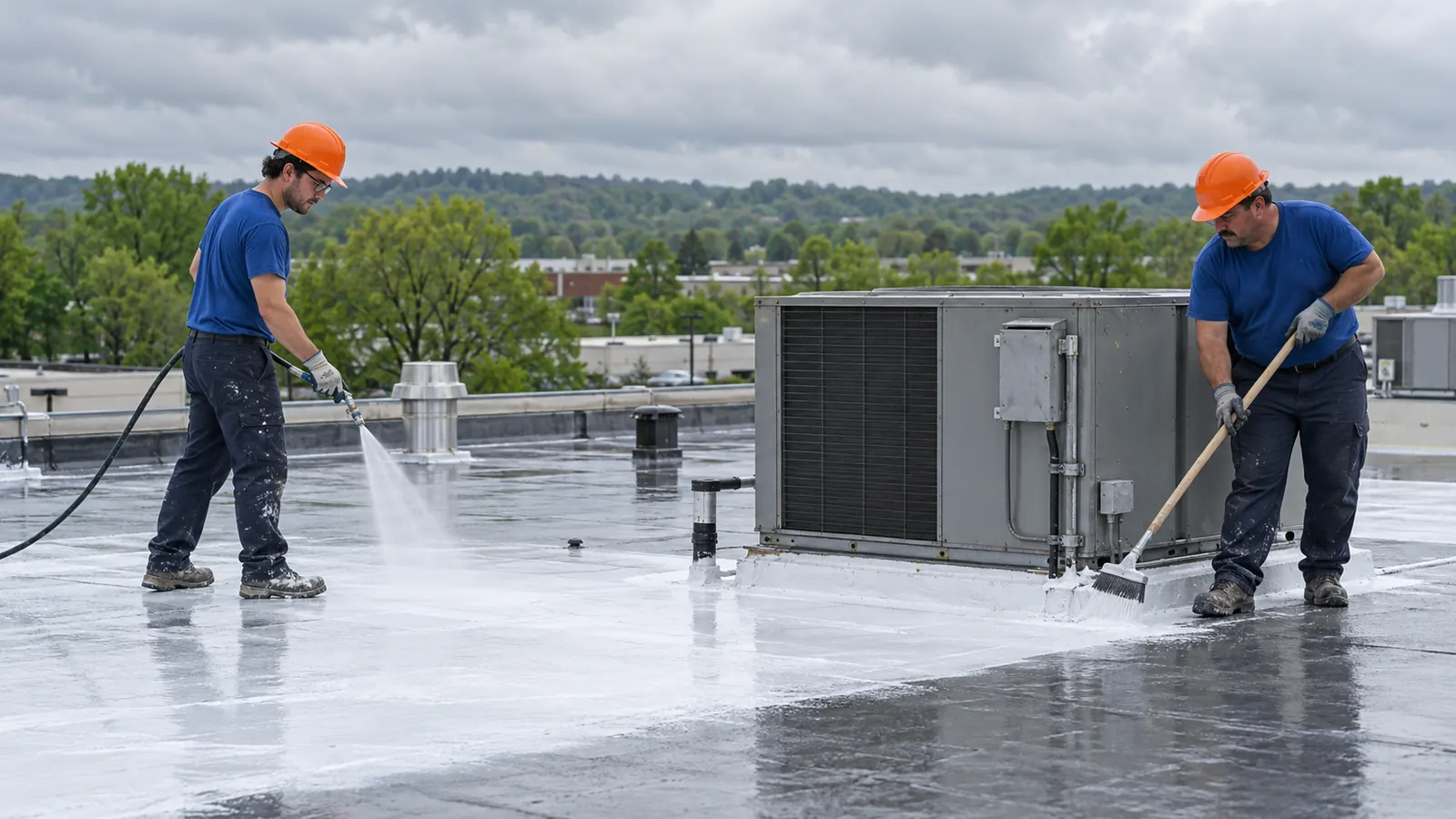
High-Solids Silicone
One or two coats rolled or sprayed over cleaned, primed surfaces. It handles standing water well, though dirt pickup can dull a white finish between washes.
Get a ballpark price
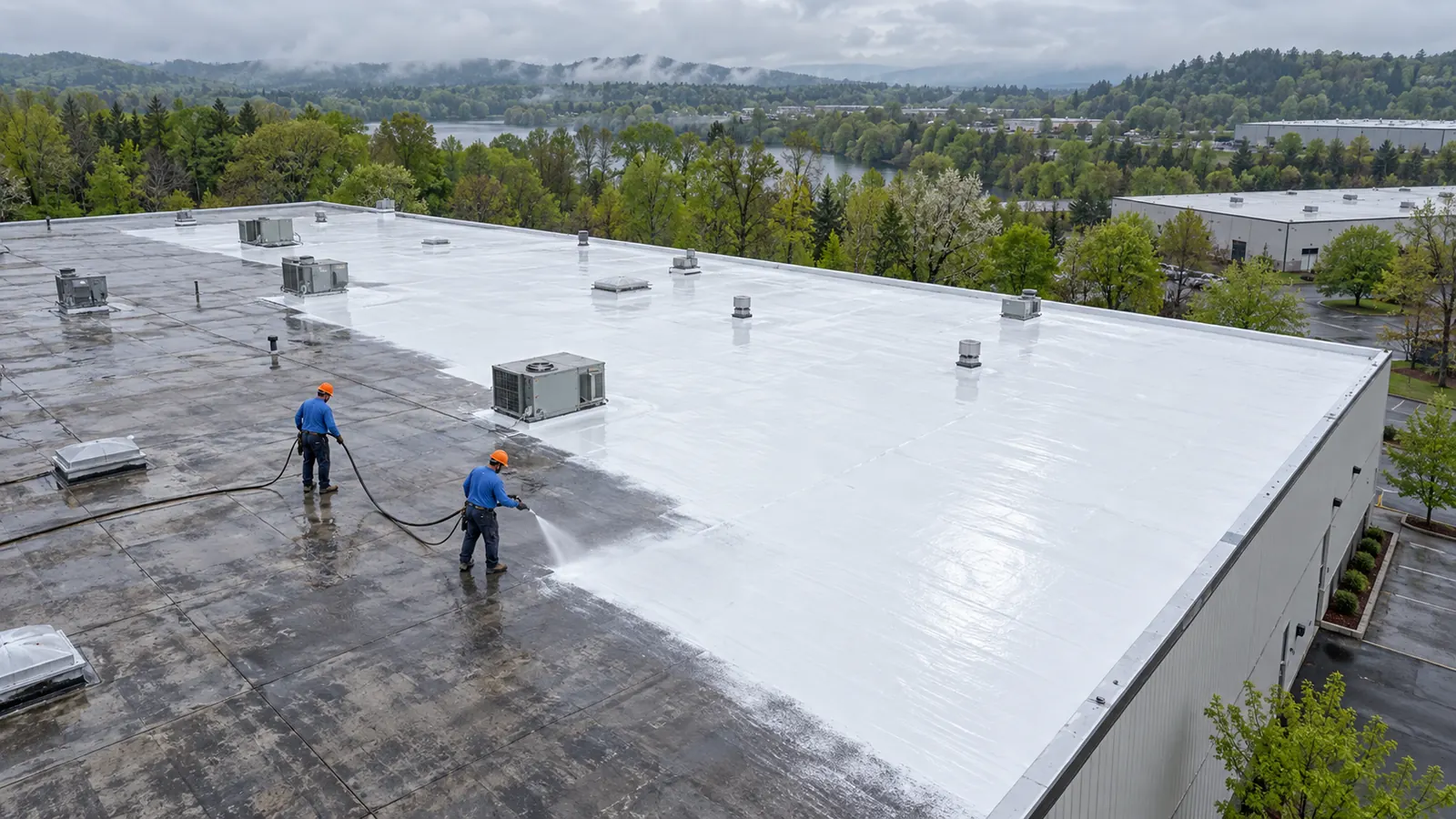
We apply silicone roof coating where water sits: low-slope metal, valleys, entry canopies, and flat roof sections on Jeffersontown commercial buildings.
Silicone earns its place on roofs that drain slowly. The table compares the conditions that point toward it and away from it.
| Roof Detail | Points To Silicone | Points Elsewhere |
|---|---|---|
| Drainage | Water stands in spots for a day or more | Water clears within hours of rain |
| Slope | Low-slope metal or flat sections | Steep pitched panels |
| Future recoats | Owner fine with silicone recoats | Owner wants to switch products later |
| Dirt and debris | Roof gets washed on a schedule | Heavy dust or leaf fall with no upkeep |
| Foot traffic | Light service traffic on walk paths | Daily traffic across the field |
Urethane is the third option when foot traffic and impact matter most.
After a Louisville-area storm, water lingers in these five areas. They are the reason owners ask for silicone.
Where a metal roof meets a box gutter, leaves and grit dam the flow and water backs up under the eave panels. Silicone rides out that standing water better than acrylic, once the gutter seams are resealed.
Small canopy roofs over doors collect leaves against the wall and hold water at the back edge. A silicone coat over the cleaned panels and the wall joint handles the wet strip that never quite drains.
Valleys where two roof sections meet carry the most water and keep it longest. Seams and fasteners in the valley get sealed first, then extra silicone goes along the valley line.
Water pools on the uphill side of rooftop unit curbs and screen walls. Flashing that has pulled away from the curb gets resealed, and the silicone coat wraps up the curb face.
Long flat roof sections settle between supports, leaving shallow ponds that dry slowly. Silicone tolerates that water, though the cause, like a sagging deck, gets checked first.
Silicone is one of three coatings we put on slow-draining roofs. Each has a different trade-off.
One or two coats rolled or sprayed over cleaned, primed surfaces. It handles standing water well, though dirt pickup can dull a white finish between washes.
Get a ballpark price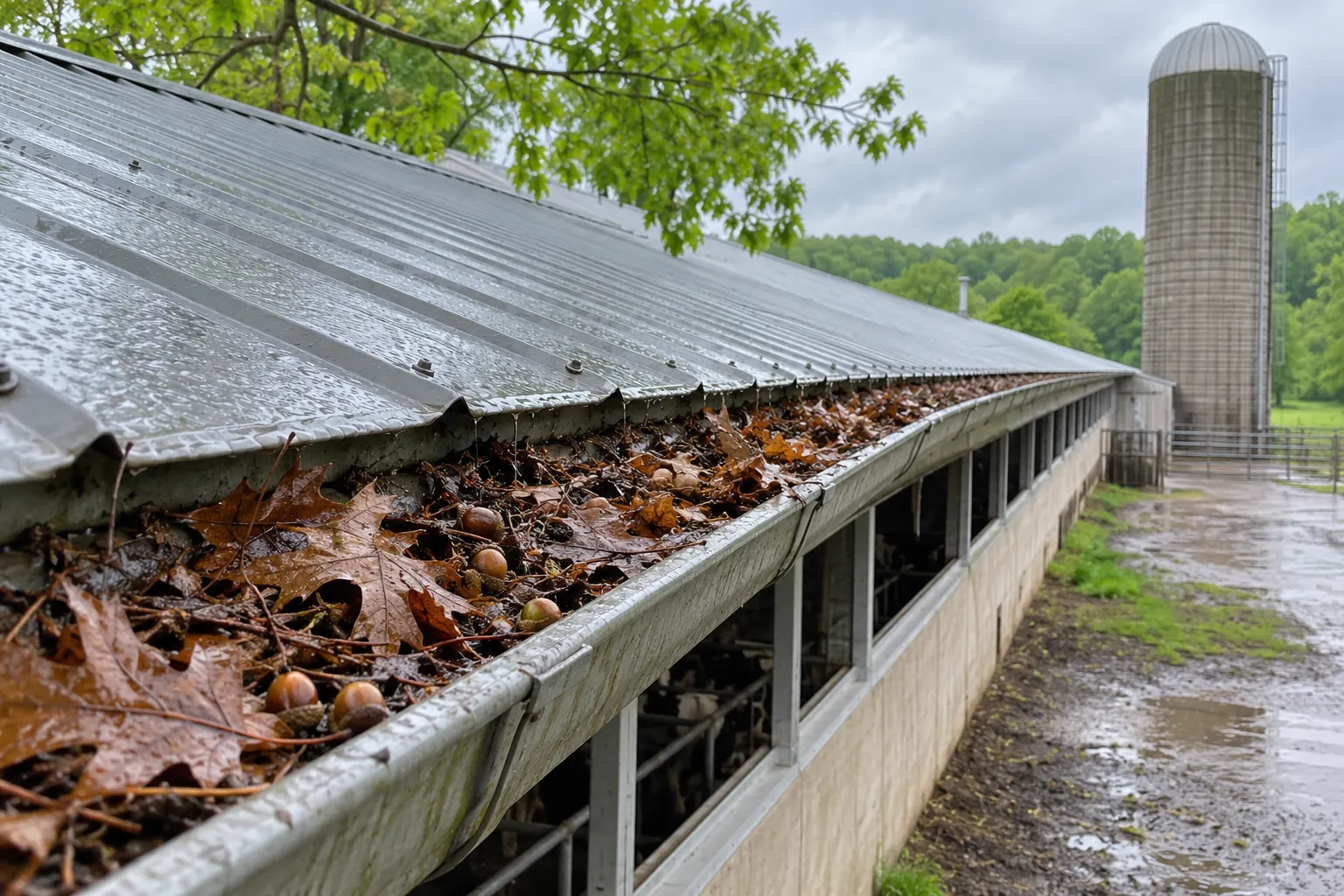
Rusted gutter bottoms get coated and seams resealed in the same visit, so the eave stays dry where water collects.
Metal roof coating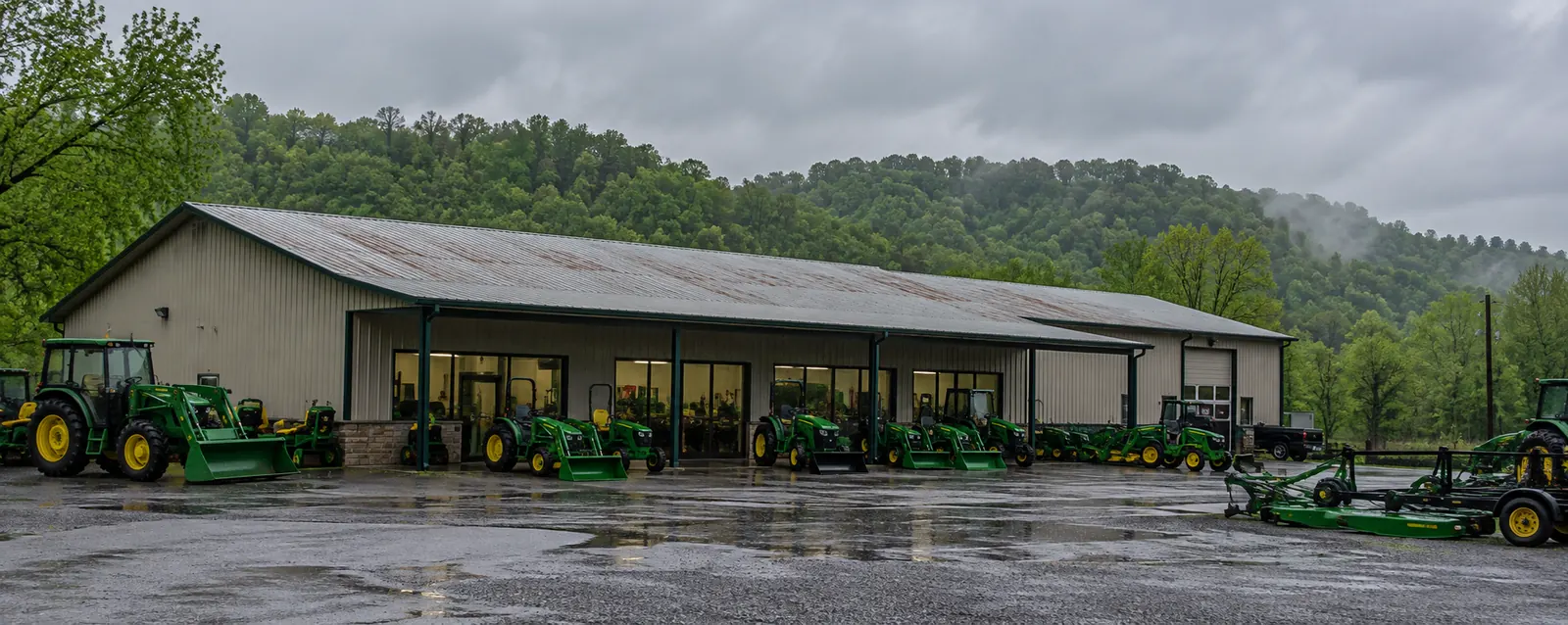
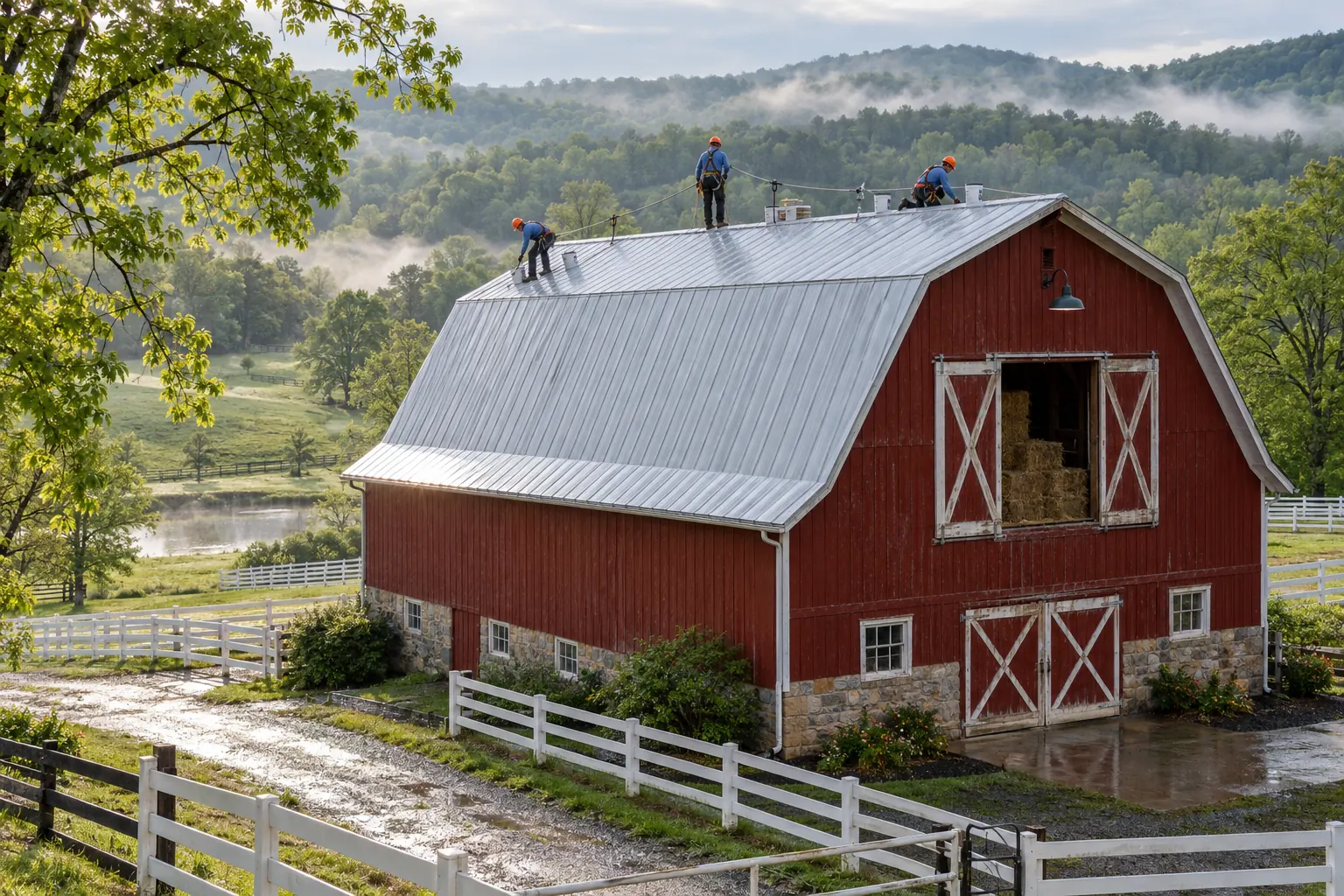
Urethane stands up to foot traffic and impact, and acrylic fits steep roofs that shed water fast. Both recoat with their own product line.
Acrylic roof coatingSilicone is chosen for wet spots. These benefits hold once the details under it are sealed.
Silicone keeps its hold where water sits for a day or two, so low-slope metal and flat sections keep shedding rain without a tear-off. Later recoats go on with silicone after a cleaning.
Silicone coating tolerates cooler, humid air better than acrylic, which widens the spring and fall work window.
Sections are coated one at a time, so rooftop units stay reachable for service techs.
Coating over the existing roof keeps old panels and membrane out of the dumpster.
Call us and describe where it sits, whether at a gutter line, a valley, or the back of a canopy. We will look at the drainage and the coating options.
Silicone holds best on a clean, dry, sealed surface, so prep takes most of the time.
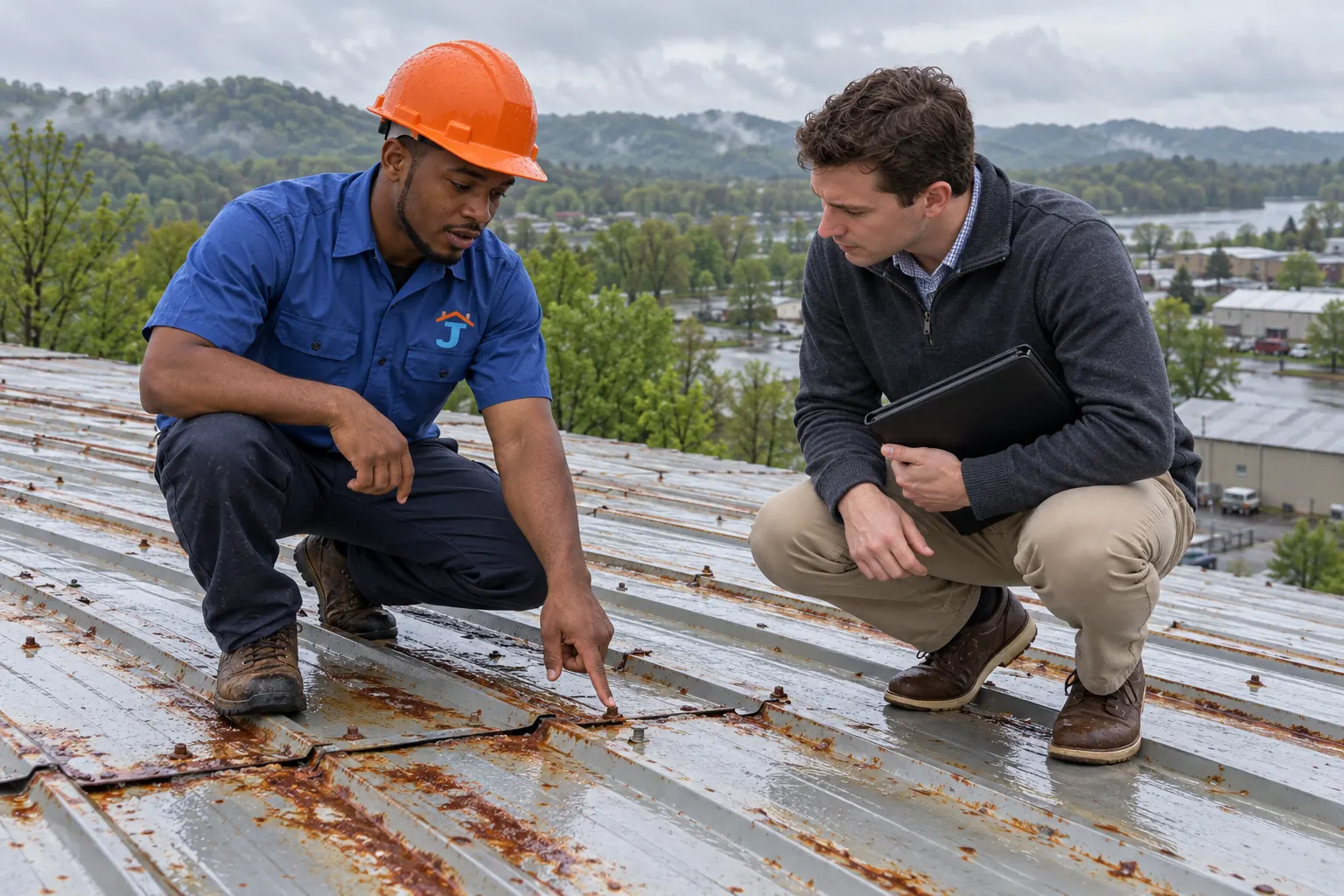
We mark every ponding area, check seams and fasteners inside each one, test a few spots for trapped moisture, and note any old coating or primer on the roof.
After a pressure wash, low spots get time and air to dry. Silicone over a wet surface lets go, so we check before any coat goes down.
Seams, laps, and fasteners inside wet areas get extra sealant or reinforced tape, and gutter seams and curb flashing are resealed.
Rusted steel and some older coatings take a primer the silicone maker specifies. A small pull test confirms adhesion.
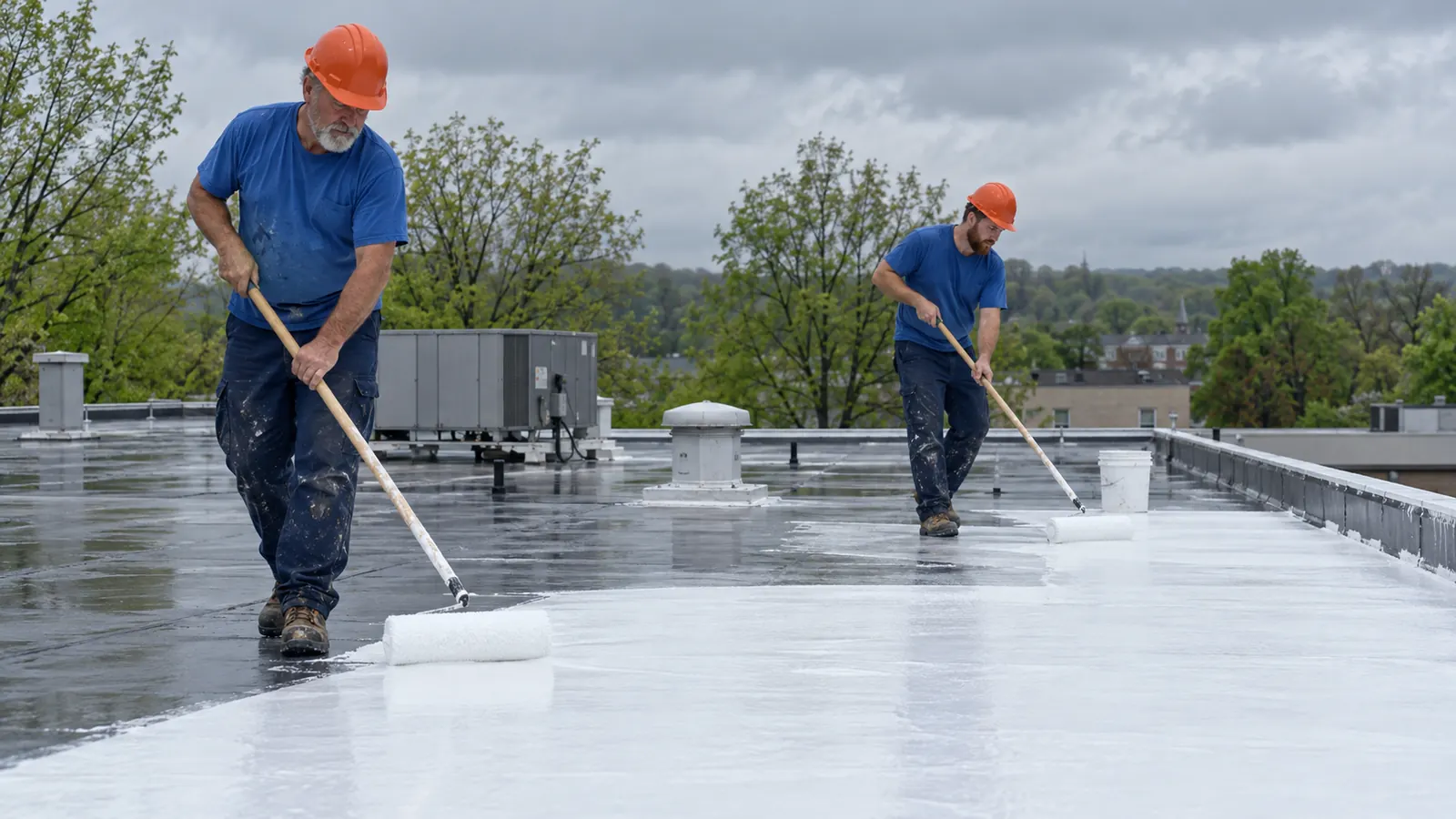
High-solids silicone goes on in one or two passes to the specified thickness, heavier along valleys and gutter lines.
Silicone is the wet-spot answer. These services fit the rest of the building.
Pitched sections that drain quickly can take acrylic, which recoats with acrylic after a simple wash.
Acrylic Roof Coating in Jeffersontown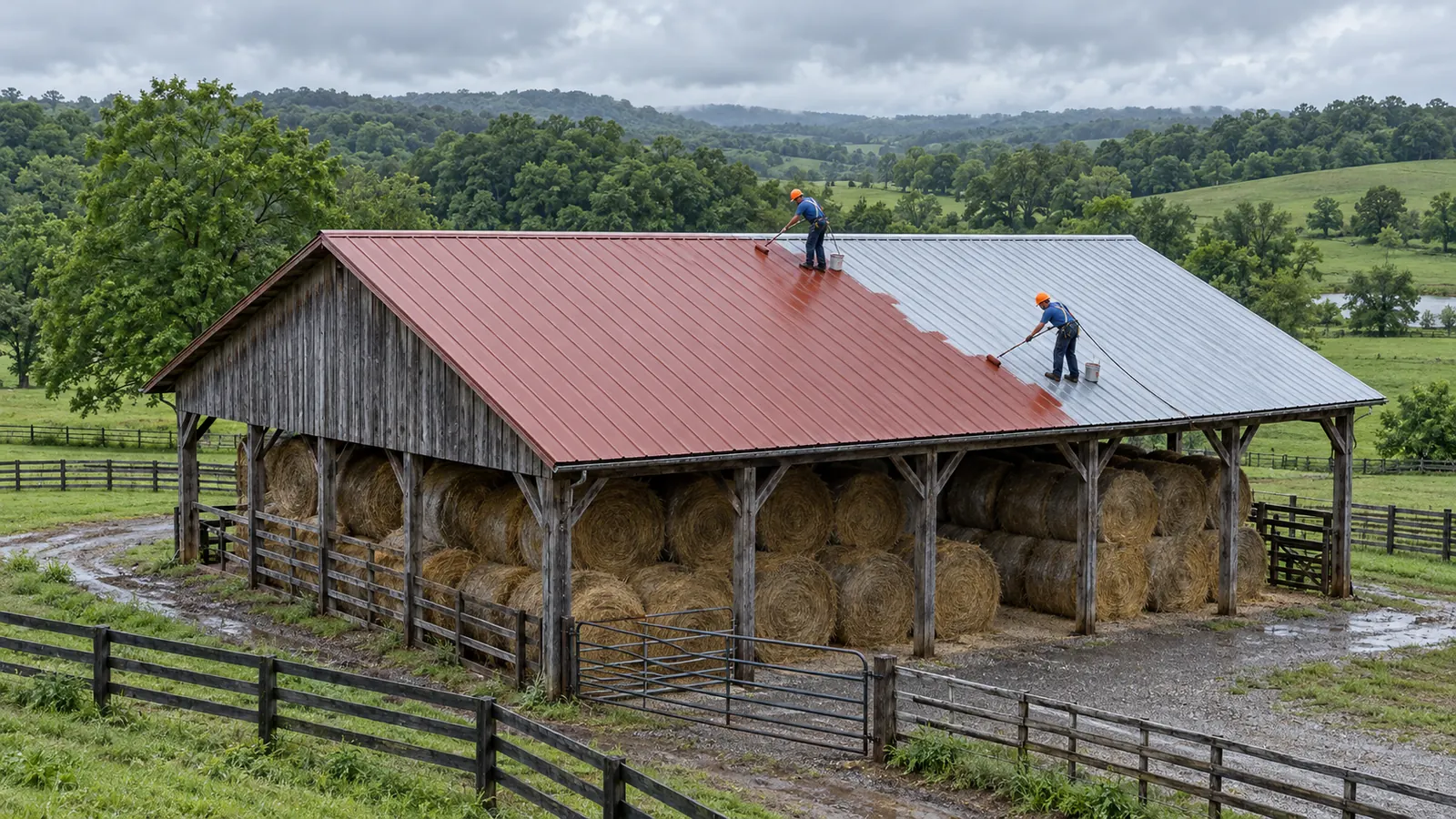
Exposed-fastener steel needs screw, lap, and rust work before silicone or any other coating.
Metal Roof Coating in Jeffersontown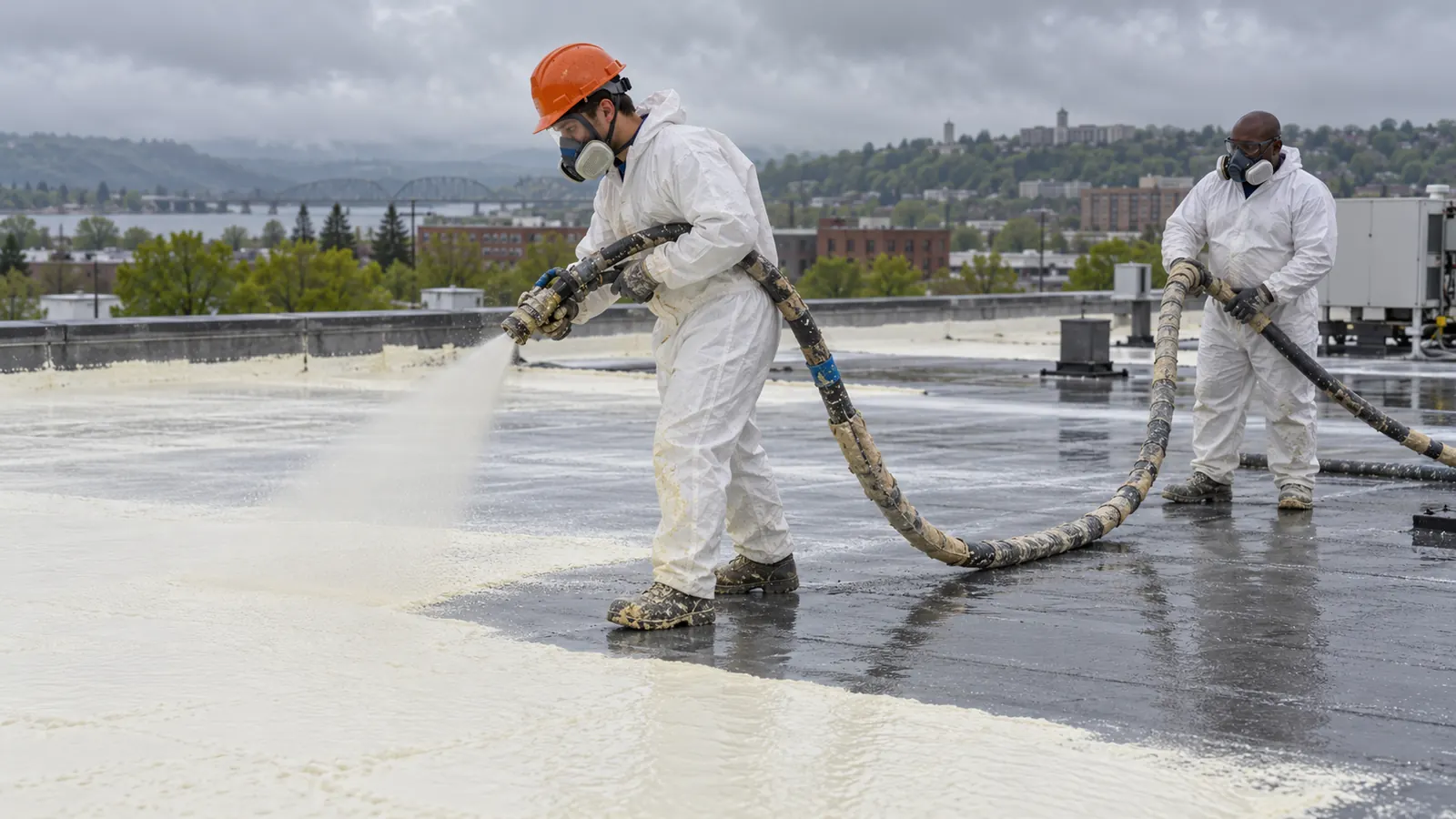
Foam can build slope into a flat section that ponds, then take a silicone topcoat.
Spray Foam Roofing in JeffersontownAnswers about detailing, rain, and planning for silicone in Jeffersontown.
Each gets detail work first, because each is a joint between two materials. Ridge caps get closure strips checked and cap screws tightened; gutters are cleared, resealed, and coated or flagged; skylight perimeters are sealed and cracked panels marked for replacement, since coating over them blocks daylight. These spots get the closest look at later checkups.
Often, once the old acrylic is clean, firmly attached, and primed with the product the silicone maker calls for. We test a small patch for adhesion first. Going the other way is harder: acrylic does not bond to silicone without a special primer, so plan the second coating cycle before choosing.
The Louisville area averages about 48 inches of precipitation a year, with May the wettest month, per National Weather Service 1991 to 2020 normals. A coated roof sheds that water while its details stay sealed. After storms, check for clogged gutters spilling over, leaf dams above end laps, and valleys between roof sections.
Each silicone product sheet lists its own rain-free window. We check the forecast and the roof surface temperature each morning, and a shower that arrives early stops the work. Fresh coating hit by rain sometimes needs a touch-up pass once it dries.
LG&E and KU run business rebate programs, and their custom track lists insulation as an eligible improvement. Roof coatings are left off the named list, so a coating or foam project would go through that custom review. Call LG&E with your account number and roof scope, and get eligibility confirmed in writing before planning around it.
Pull the roof's age, past leak dates and locations, photos of rust stains under end laps, and the contact for whoever services the rooftop units. Add ladder, hatch, or lift access details and records of past coatings. Silicone limits what can go over it later, so knowing what is on the roof now matters.
Enter your roof size for a ballpark range, or call and we will look at where the water sits.
Leave a name and number and we will call you back about your commercial roof.
Or call us now: (502) 293-5577