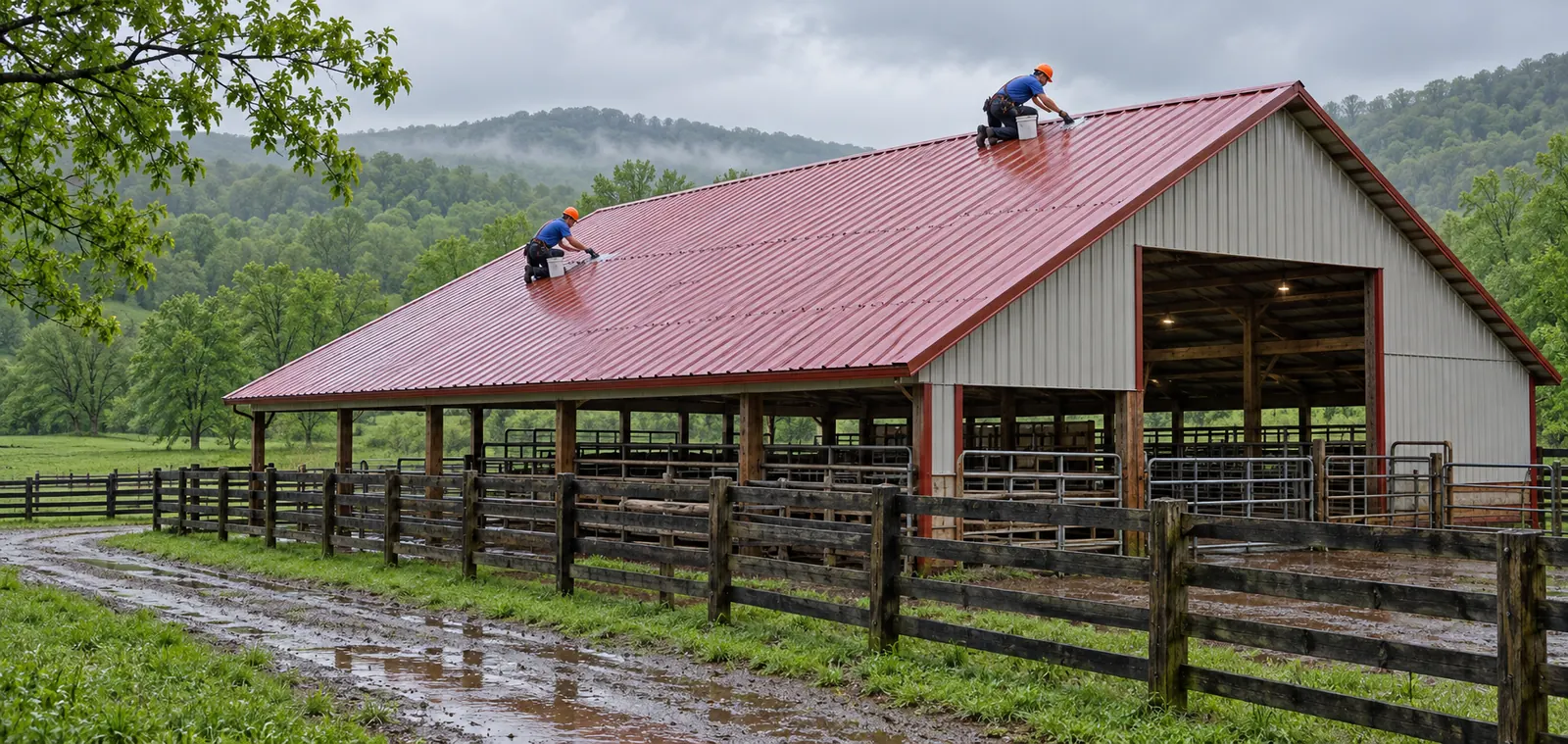
Silicone Over Metal
Low spots, valleys, and gutter lines that hold water call for silicone. Later recoats need silicone or a special primer.
Silicone roof coating
We do commercial metal roof coating on exposed-fastener and standing seam roofs across Jeffersontown warehouses, shops, and plants, handling every screw, lap, and rusted edge before the first coat.
We sort every metal roof into ready now or fix first. The table shows what decides it.
| What We Check | Ready To Coat | Fix First |
|---|---|---|
| Panel steel | Rust brushes off to firm metal | Rust flakes off in layers or holes show |
| Fasteners | Screws bite into the purlins | Screws spin, strip, or have backed out |
| Laps and ridge caps | Tight underfoot with surface rust | Opened laps with rust stains on purlins below |
| Gutters | Firmly attached along the eave | Rusted-out bottoms or loose hangers |
| Skylight panels | Intact plastic and a sealed perimeter | Cracked or yellowed panels |
| Structure | Solid underfoot when walked | Bent purlins or sagging runs |
Fix-first items get repaired or re-paneled, then the whole roof is coated.
On a metal roof walk, these are the conditions that set the scope of work.
Neoprene washers under screw heads harden and split after years of sun. Each leaking screw lets water run down the shank and stain the deck or stock below. We tighten, cap, or swap every one before coating.
End laps cross the slope, so water and leaves collect at the upper panel edge. On long Bluegrass Commerce Park roofs with several end lap rows, rust stains on the purlins under each row show where water has been.
Orange-brown red rust means the steel itself is corroding, often at laps and cut edges. Chalky white rust is the zinc on galvanized panels wearing away. Each one gets its own wash and primer.
Fiberglass skylight panels yellow, crack, and pull away from their perimeter sealant. Coating over them blocks daylight, so we seal the edges of good panels and mark cracked ones for replacement.
Ridge caps, eave trim, and rake trim lose screws and foam closures in wind. Blown rain then gets in at the top or edge of the roof and shows up inside far from where it entered.
A metal roof can take one of three coating systems. The slope, the low spots, and your plans for insulation decide which.
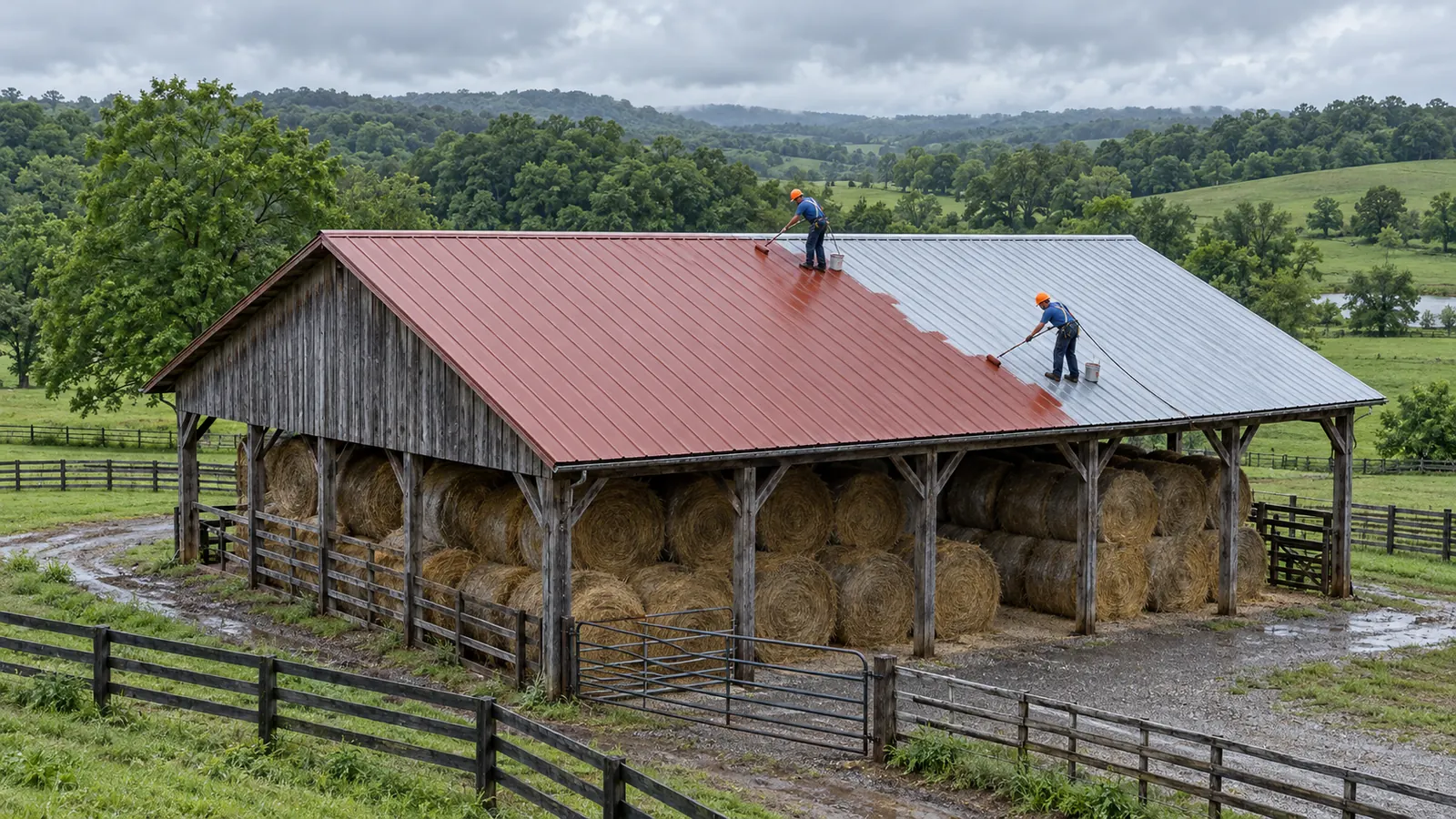
Low spots, valleys, and gutter lines that hold water call for silicone. Later recoats need silicone or a special primer.
Silicone roof coating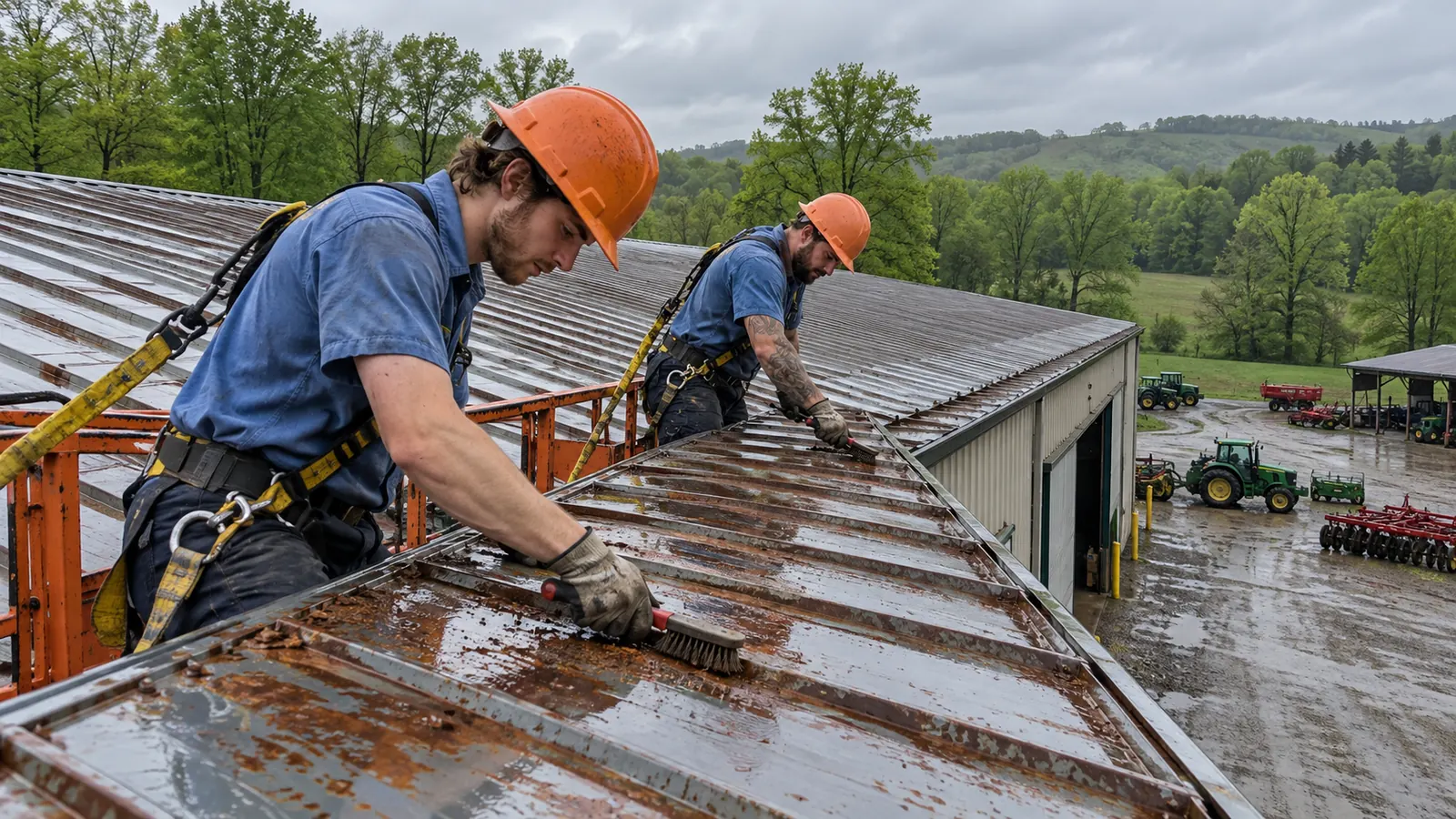
Pitched panels that drain fast take acrylic well, and it recoats with acrylic after a wash. It needs warm, dry hours to cure.
Acrylic roof coating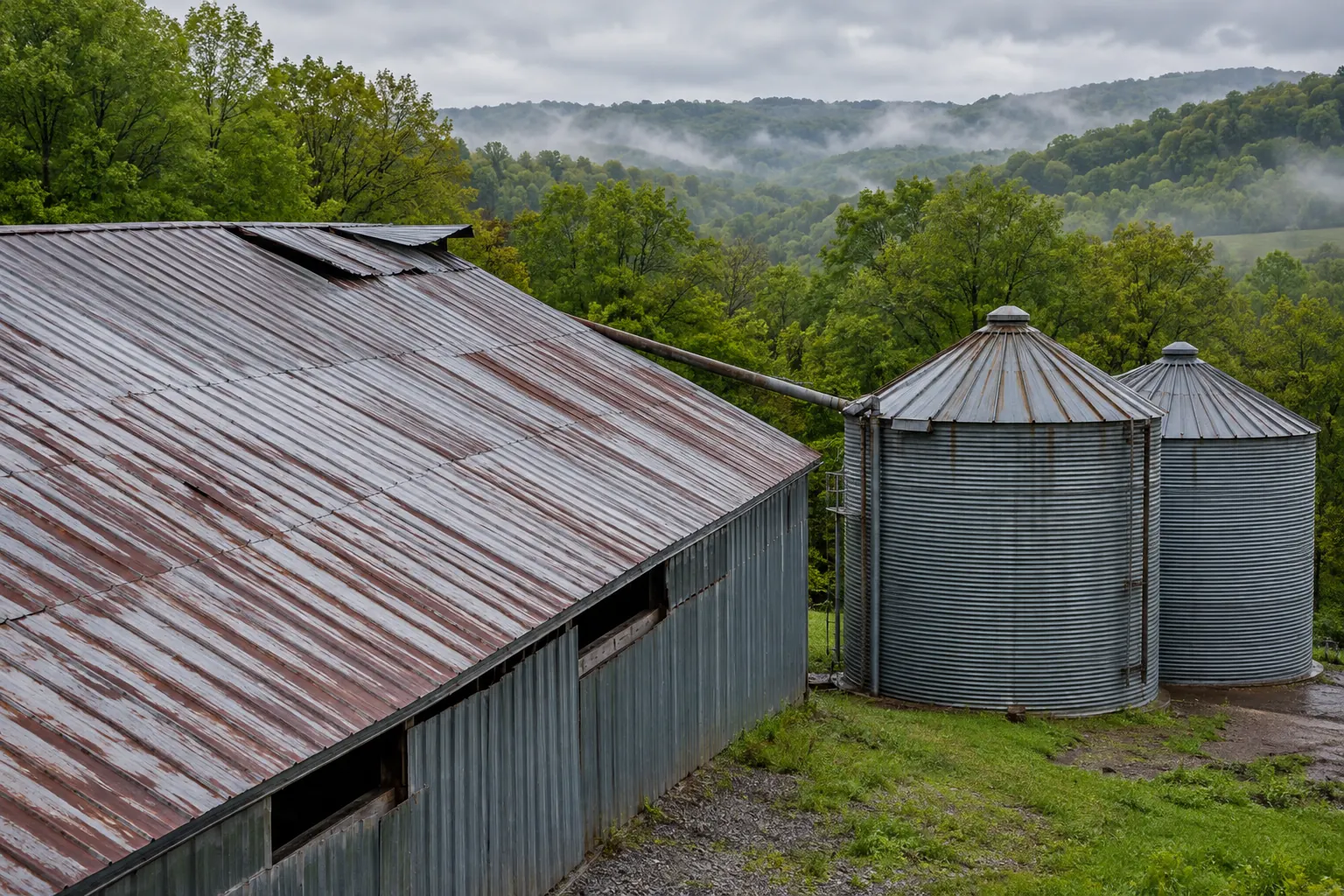
Heated or cooled buildings that need insulation get foam, which fills the ribs and buries every screw before a topcoat goes on.
Spray foam roofingOn an aging steel roof, a coating protects the metal that still carries weight. Here is what that gets you.
Coating over solid panels avoids a tear-off, so less waste is hauled away and less dust falls into the building. Savings compared with replacement depend on how many screws and panels need work first.
Coating happens on the panels, so docks and production keep running while sections are done in turn.
A white topcoat reflects more sun than faded metal, which helps offices and stock under a thin roof in summer.
When the topcoat wears, a cleaning and recoat with the same product line extends the system again.
Call us with the building address and where the drip lands inside. We will walk the fastener rows and laps and tell you what the roof needs.
Detail work comes before the field coat on every metal roof we do.
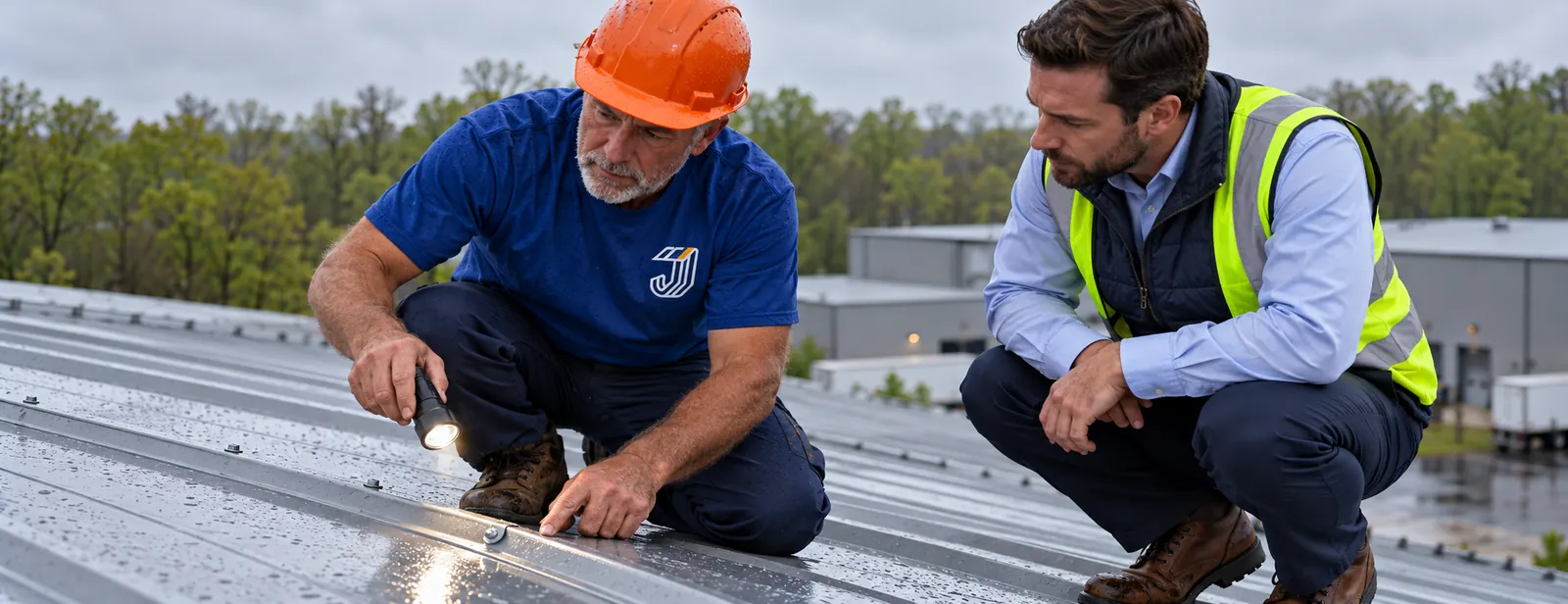
We walk each panel row, test screws with a driver, press on laps and ridge caps, and check the underside from inside for drips and purlin rust.
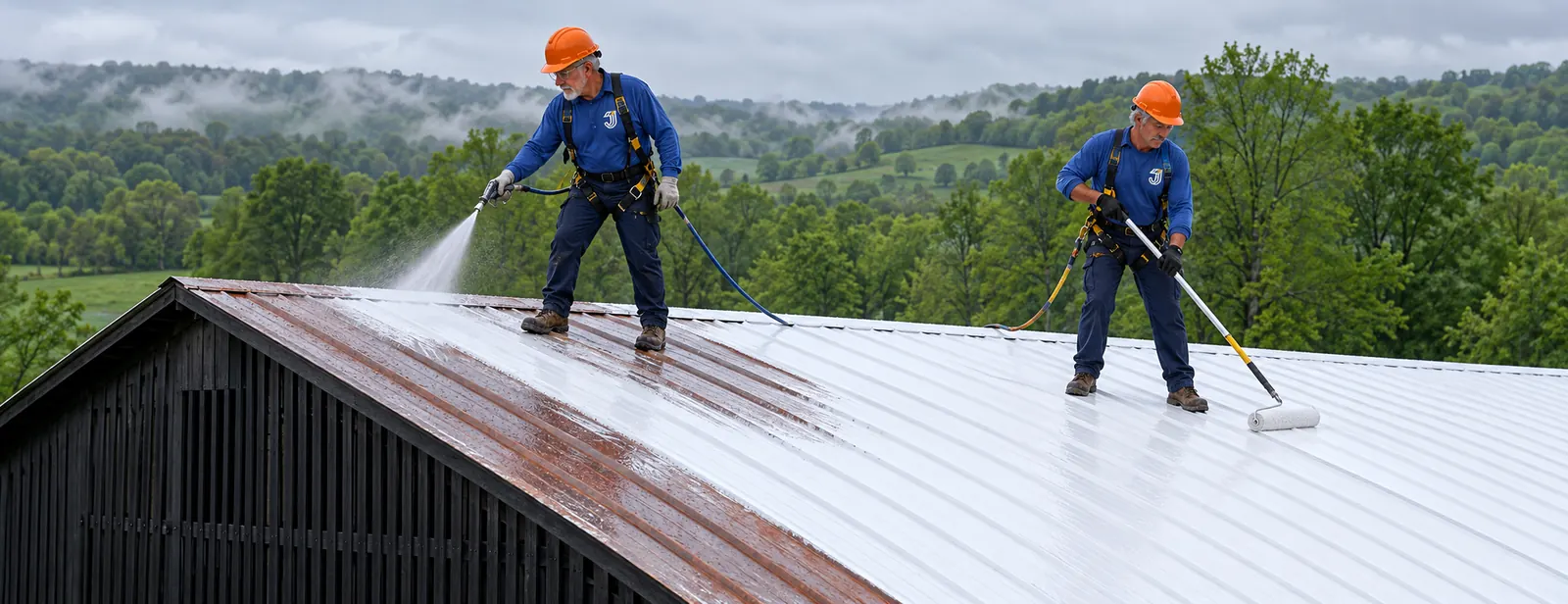
Dirt, chalking, and loose paint come off with a pressure wash, starting away from known leaks so stock below stays dry.
Stripped screws get oversized fasteners with new washers. Side laps and end laps get brush-grade sealant or polyester-reinforced seam tape set in a base coat.
Red rust is wire brushed or ground to firm steel and spot primed, and white rust gets a wash and a primer matched to galvanized metal.
One or two coats go across the field to the specified thickness, with wet film readings and product names recorded for the next crew.
Some metal roofs are better served by a different system. These three come up most.
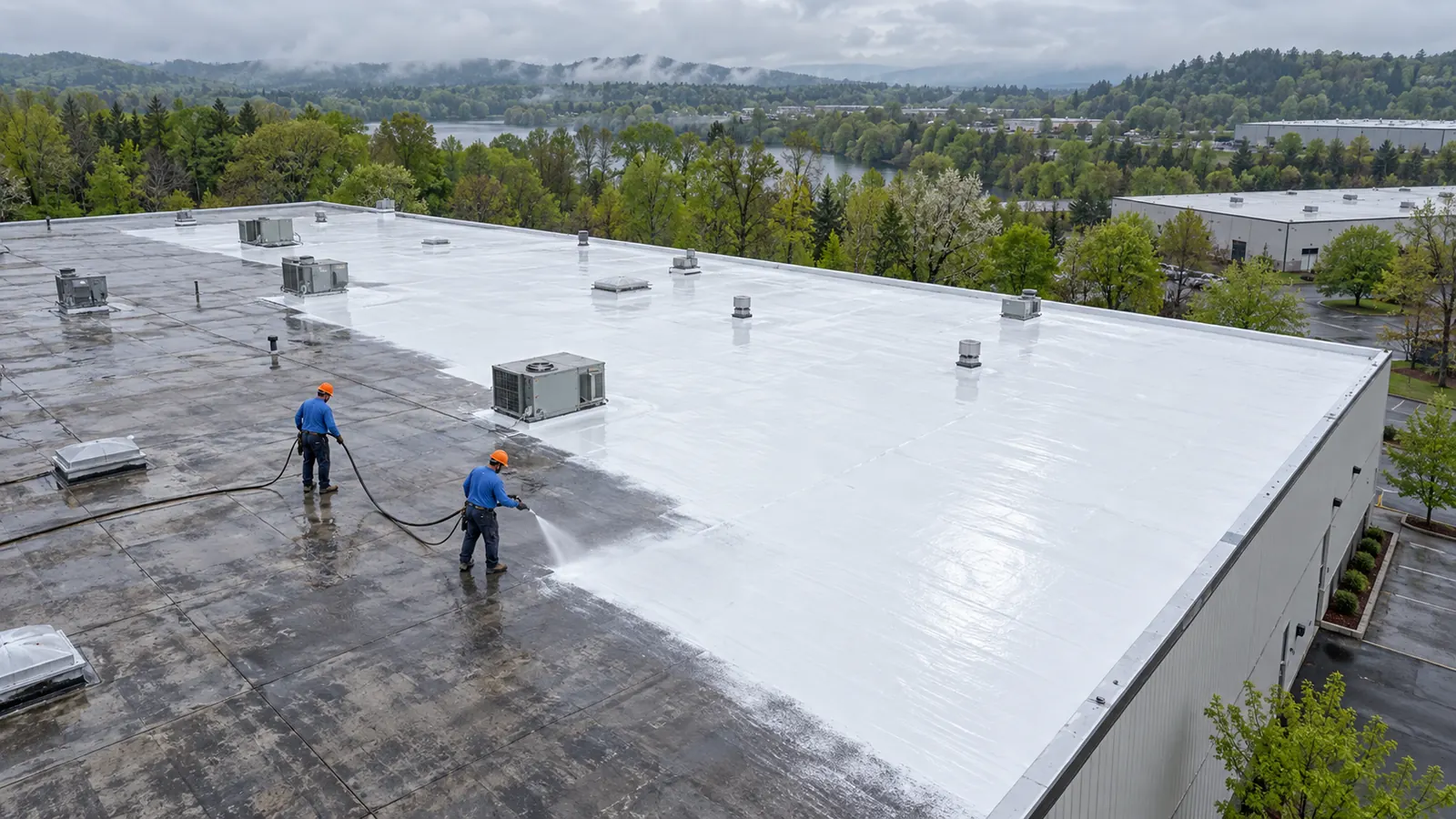
When water sits in low spots for a day after rain, silicone holds up where acrylic would break down.
Silicone Roof Coating in Jeffersontown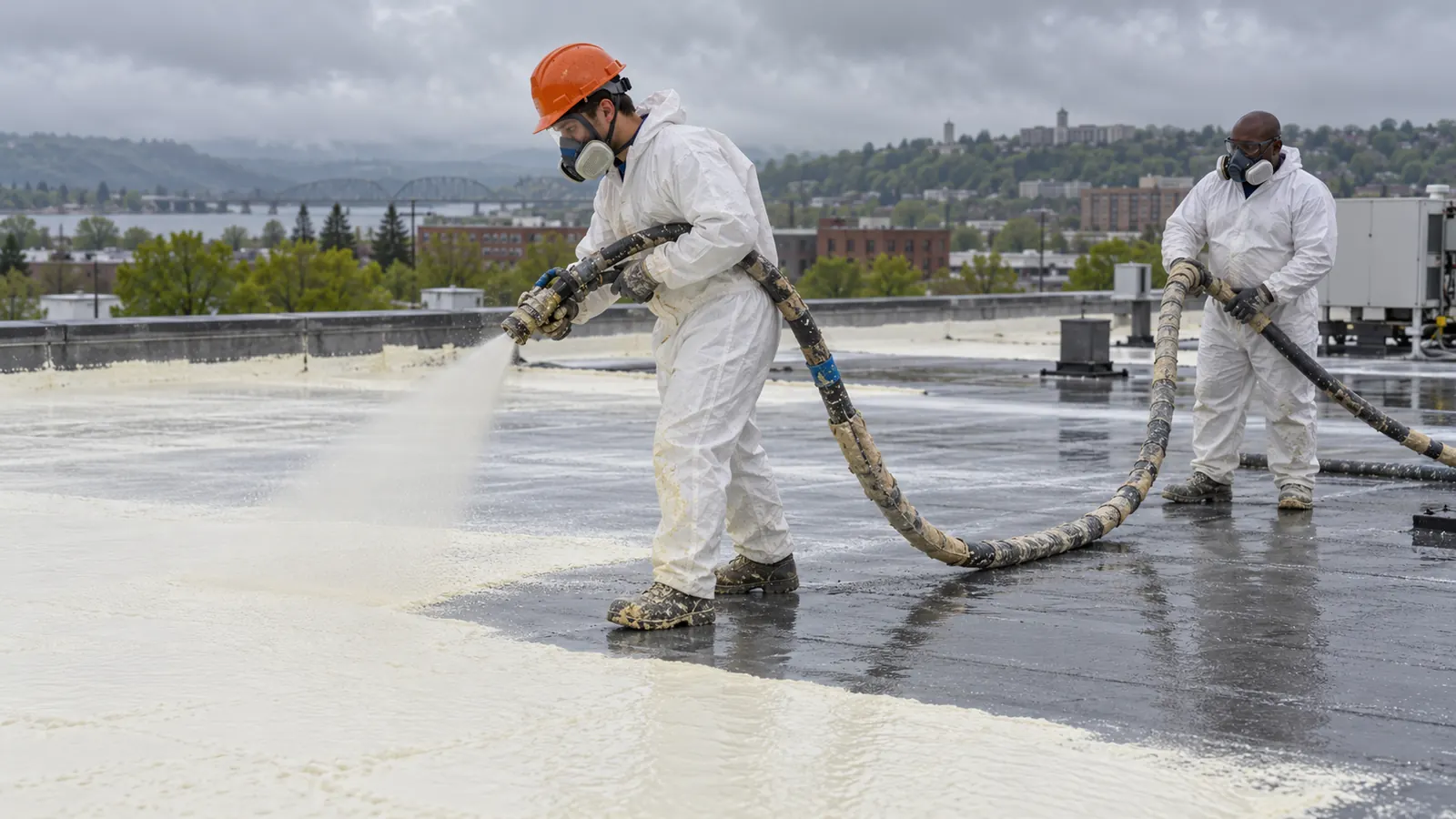
For a heated building that sweats or loses heat through the panels, foam adds insulation under the coating.
Spray Foam Roofing in Jeffersontown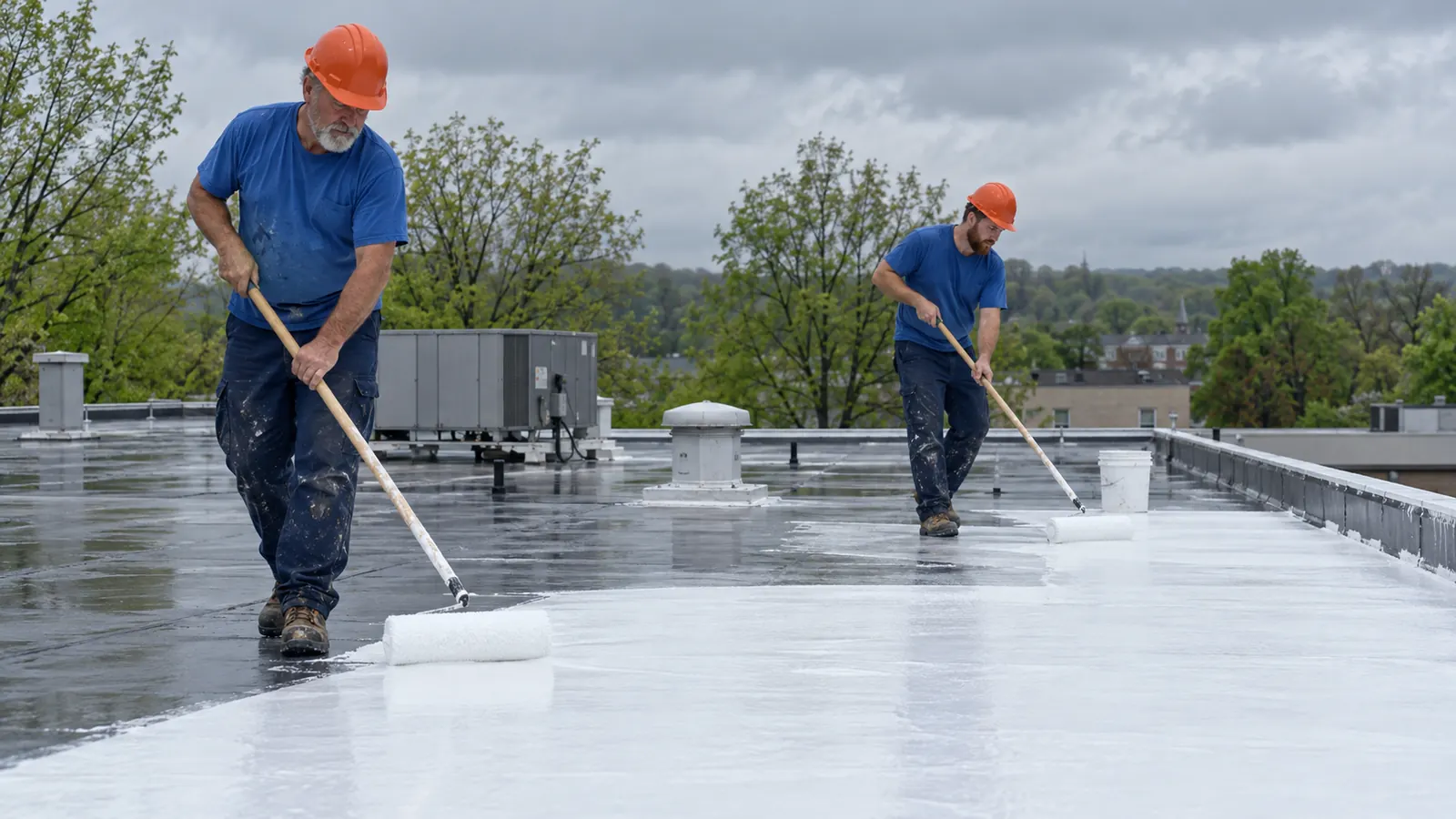
On steep panels that shed water within hours, acrylic gives a bright finish that recoats easily.
Acrylic Roof Coating in JeffersontownAnswers about screws, laps, rust, and prep on Jeffersontown metal roofs.
Yes, once each detail is prepared and sealed first. A coat stretched over a backed-out screw keeps leaking because the screw keeps moving. We swap loose screws for oversized fasteners, seal laps with sealant or seam tape, and seal skylight perimeters, then coat the field with extra material at each joint.
We clean them, then seal them with brush-grade mastic or polyester-reinforced seam tape set into a base coat, because overlaps move as the steel heats and cools. End laps get the most care, since water running down the roof hits them head on. Look inside for rust stains on the purlins under each end lap row.
Red rust is orange-brown and streaks from laps, screw heads, and panel edges where the steel itself is corroding. White rust is a chalky film on galvanized panels, usually in flat spots that hold damp debris, where the zinc is wearing away. Red rust gets brushed and primed; white rust gets washed and a galvanized-metal primer.
Any screw that is stripped, rusted at the head, or spinning gets replaced, and the rest get resealed. On an R-panel roof we test every screw in each row with a driver, tighten or upsize the loose ones, and cap or seal each head. One spinning screw keeps leaking under the coating and stains the deck below.
It starts with Inspect Your Roof, where every panel row is walked, screws are tested, laps are checked, and the underside is looked at for drips. Then come a pressure wash, repairs to screws, laps, gutters, and trim, rust primer, and base and top coats checked with a wet film gauge. A walk-through records readings and product names.
Yes. Standing seam panels hide their fasteners under clips, so prep centers on opened seams, end details, and penetrations, and the sealant has to let the panels slide. R-panel and PBR roofs have hundreds of exposed screws, each tested, plus side laps and end laps. The coating system itself can be the same.
Enter the roof size for a ballpark range, or call to schedule a roof walk on your Jeffersontown building.
Leave a name and number and we will call you back about your commercial roof.
Or call us now: (502) 293-5577