White Acrylic Topcoat
A bright white finish reflects more sun than faded steel. Rated products are listed in the Cool Roof Rating Council directory.
Get a ballpark price
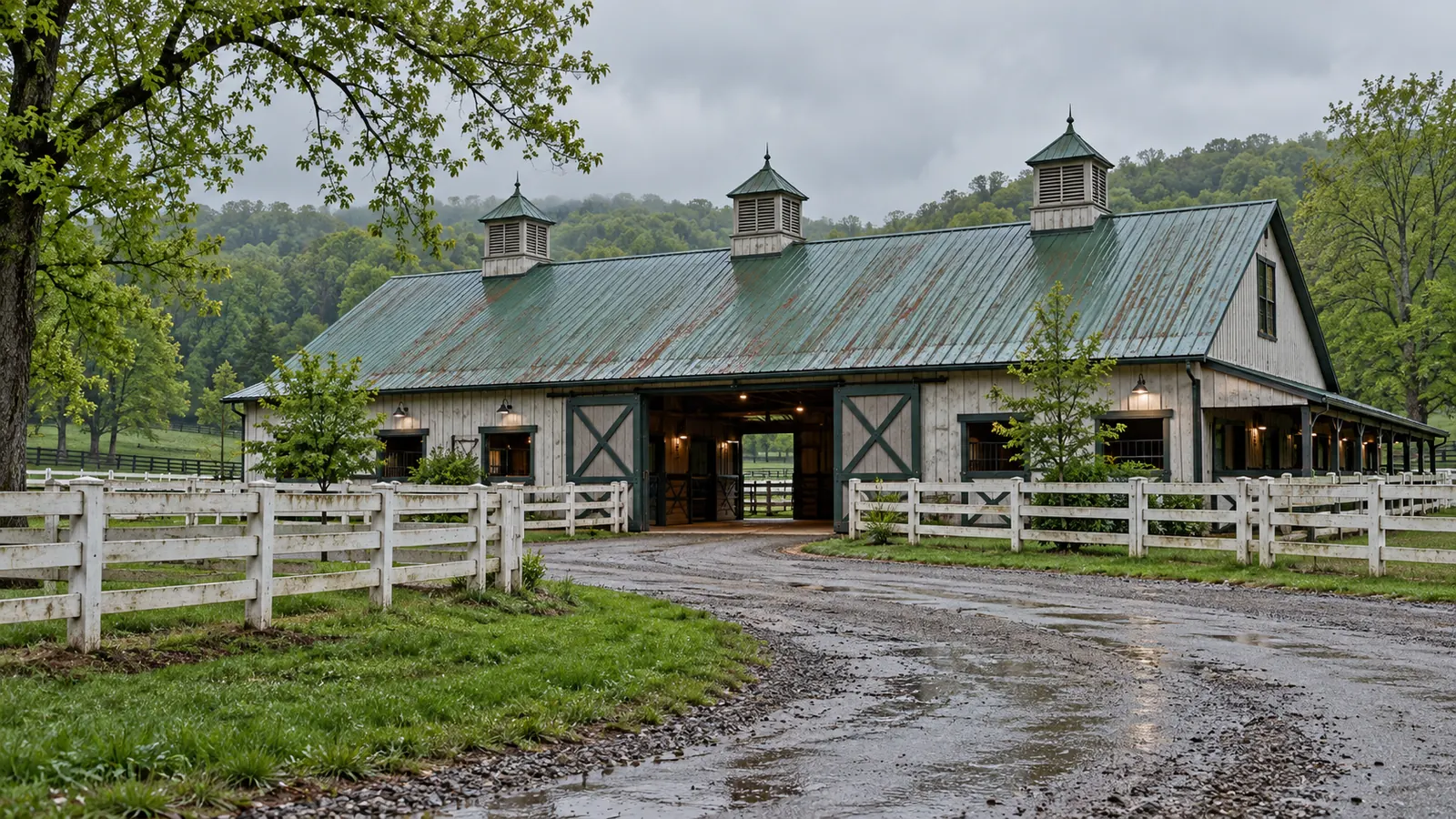
We apply acrylic roof coating to pitched commercial metal roofs in Jeffersontown that shed water fast, scheduled for warm, dry days so each coat cures right.
Acrylic does well on roofs that drain and poorly on roofs that hold water. Here is how we sort them.
| Roof Detail | Good For Acrylic | Better With Another System |
|---|---|---|
| Slope and drainage | Steady pitch, water gone within hours | Low spots that hold water |
| Finish | Bright white or light gray wanted | Finish color matters less than ponding |
| Recoat plans | Easy acrylic recoats after a wash | Silicone already on the roof |
| Season | Work planned for warm, dry weeks | Job must happen in cold, damp weather |
| Rust | Surface rust that primes clean | Rust through the panel |
Acrylic covers a lot of roof, and these five conditions get handled first so it lasts.
Wire brushing gets red rust back to firm steel, and a rust-inhibiting primer seals it. Acrylic over bare rust lets corrosion keep spreading under the film.
Each screw head gets tightened or replaced and then sealed with a dab of sealant or a cap, because acrylic alone will not hold a moving screw.
Steel collects dew fast on cool nights, and acrylic needs a surface above the dew point. Work starts once the sun dries the roof and stops early enough for a skin to form.
Side and end laps flex every day as the panels heat and cool. Reinforced seam tape set in a base coat lets the acrylic flex with them.
Old factory paint on the panels turns chalky, and chalk keeps acrylic from gripping. A pressure wash and a hand-rub check confirm the surface is clean before priming.
Acrylic comes in more than one build. We match the system to the roof's slope, color, and recoat plans.
A bright white finish reflects more sun than faded steel. Rated products are listed in the Cool Roof Rating Council directory.
Get a ballpark price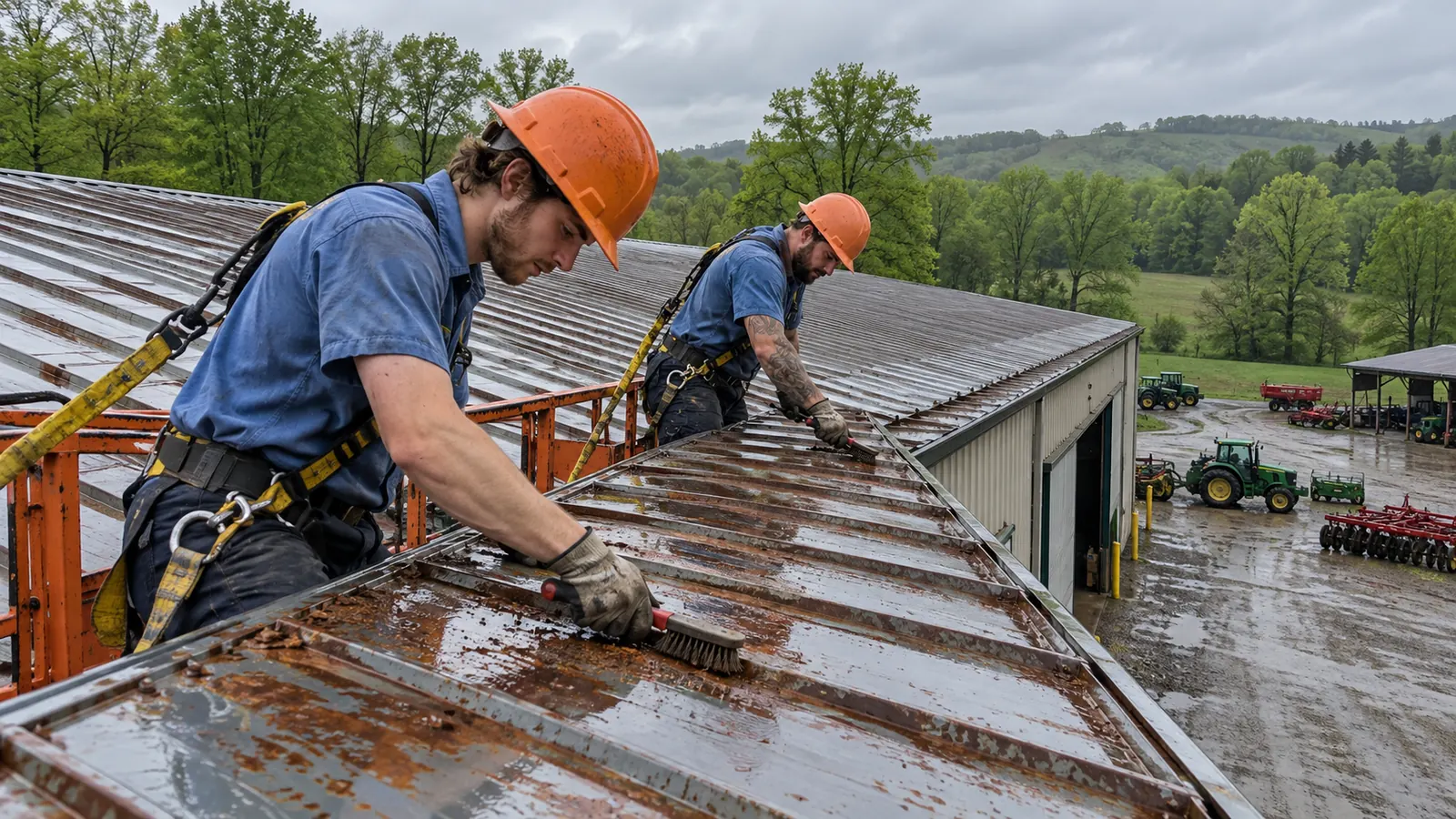
Rusted or galvanized steel gets a matched primer, then base and top coats, with reinforced tape set at laps and seams.
Metal roof coating
When part of the roof holds water, that section can take silicone while the pitched areas get acrylic.
Silicone roof coatingAcrylic is the easy-upkeep choice for roofs that drain. These are its strong points.
When an acrylic topcoat wears thin, the roof gets a wash and a fresh coat of acrylic, with no special primer. That keeps the next cycle quick and keeps the panels covered.
A light topcoat reflects more sunlight than bare or faded metal, so panels stay cooler on summer afternoons.
Coating the existing steel avoids hauling tear-off debris away from the building.
Acrylic goes on the roof section by section while the building below stays in use.
Call us before the paint wears through to rust. We will check the panels, the slope, and whether acrylic fits your building.
Acrylic work follows the weather as much as the calendar.
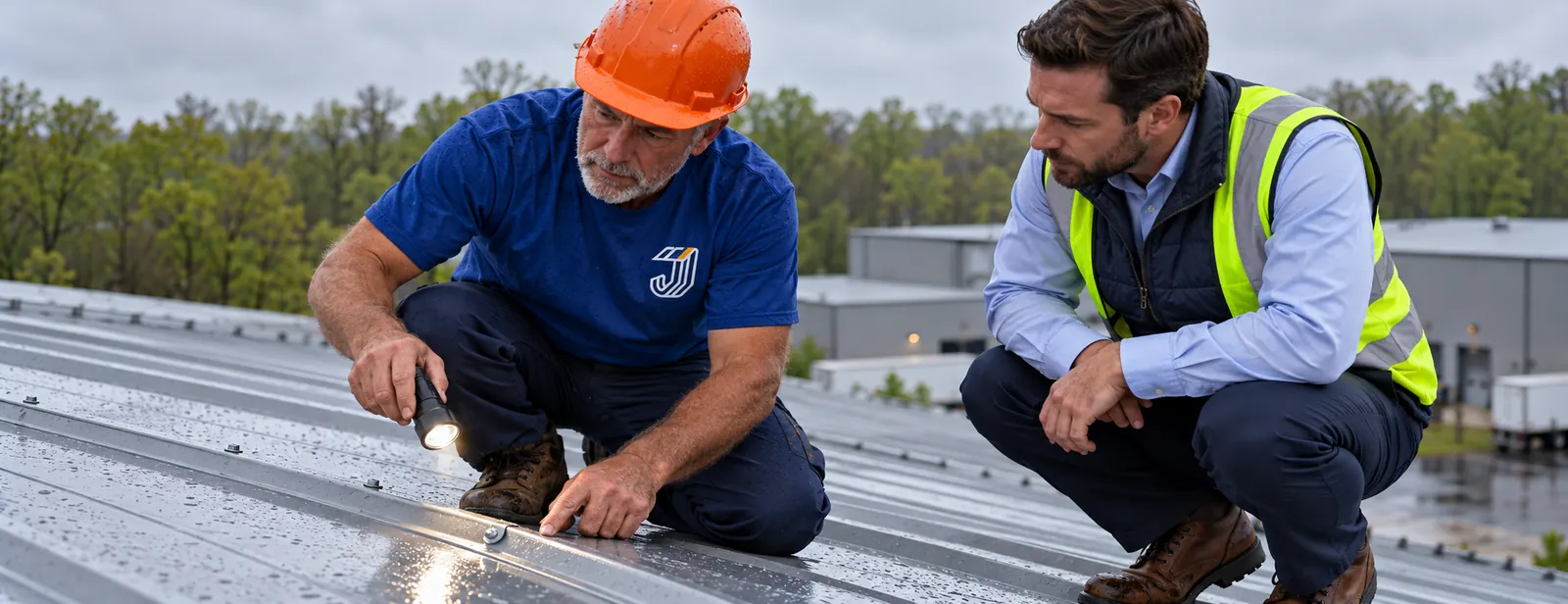
We check slope and drainage, rub the panels for chalk, test screws, and look for any spot that holds water, since ponding breaks acrylic down.
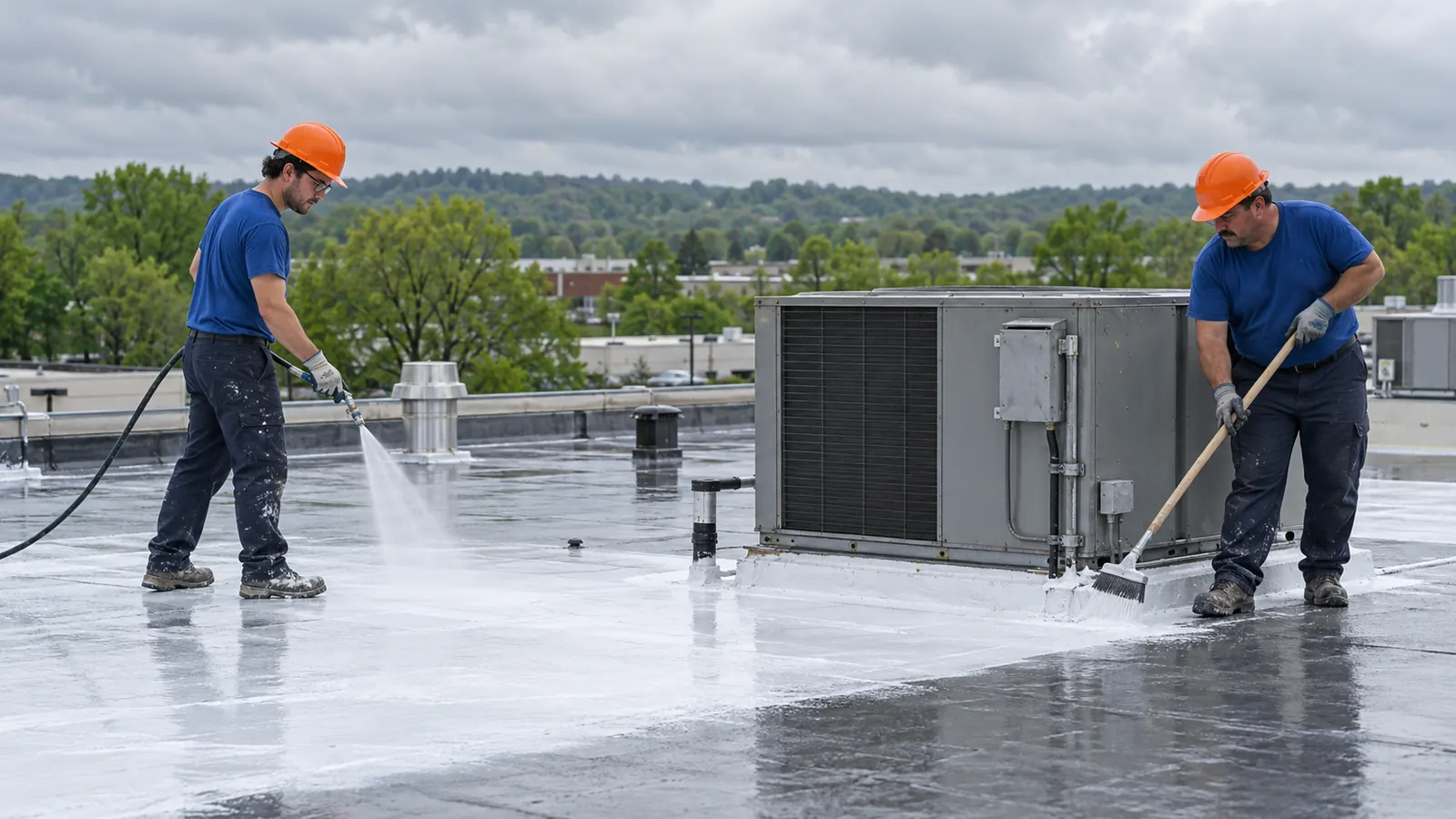
A pressure wash removes chalk, dirt, and loose paint, and the roof dries fully before anything else goes on.
Screws are tightened, swapped, or capped, and laps get reinforced tape in a base coat.
Red rust is brushed back and primed with the product the acrylic maker specifies, and galvanized areas get their own primer.
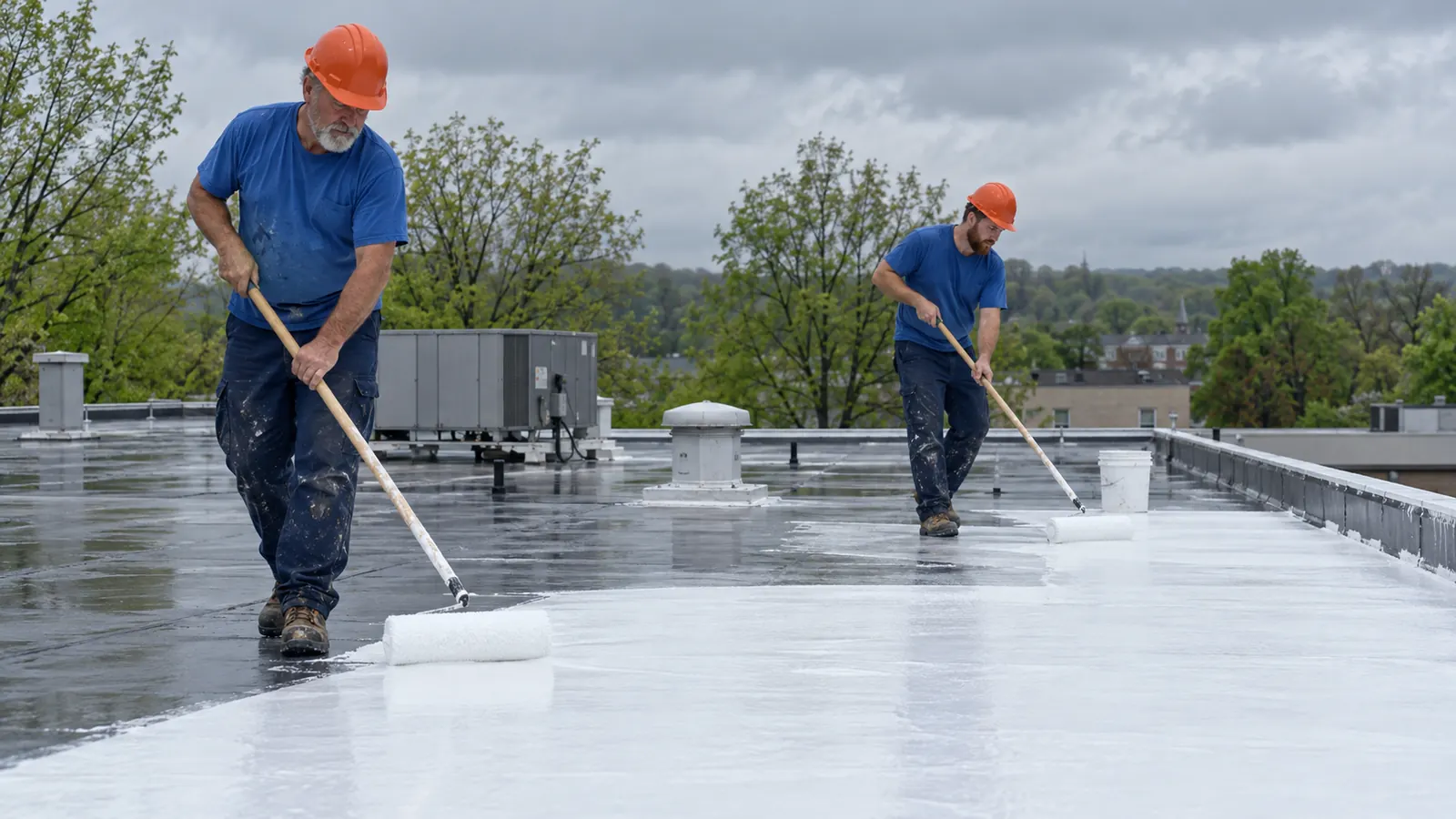
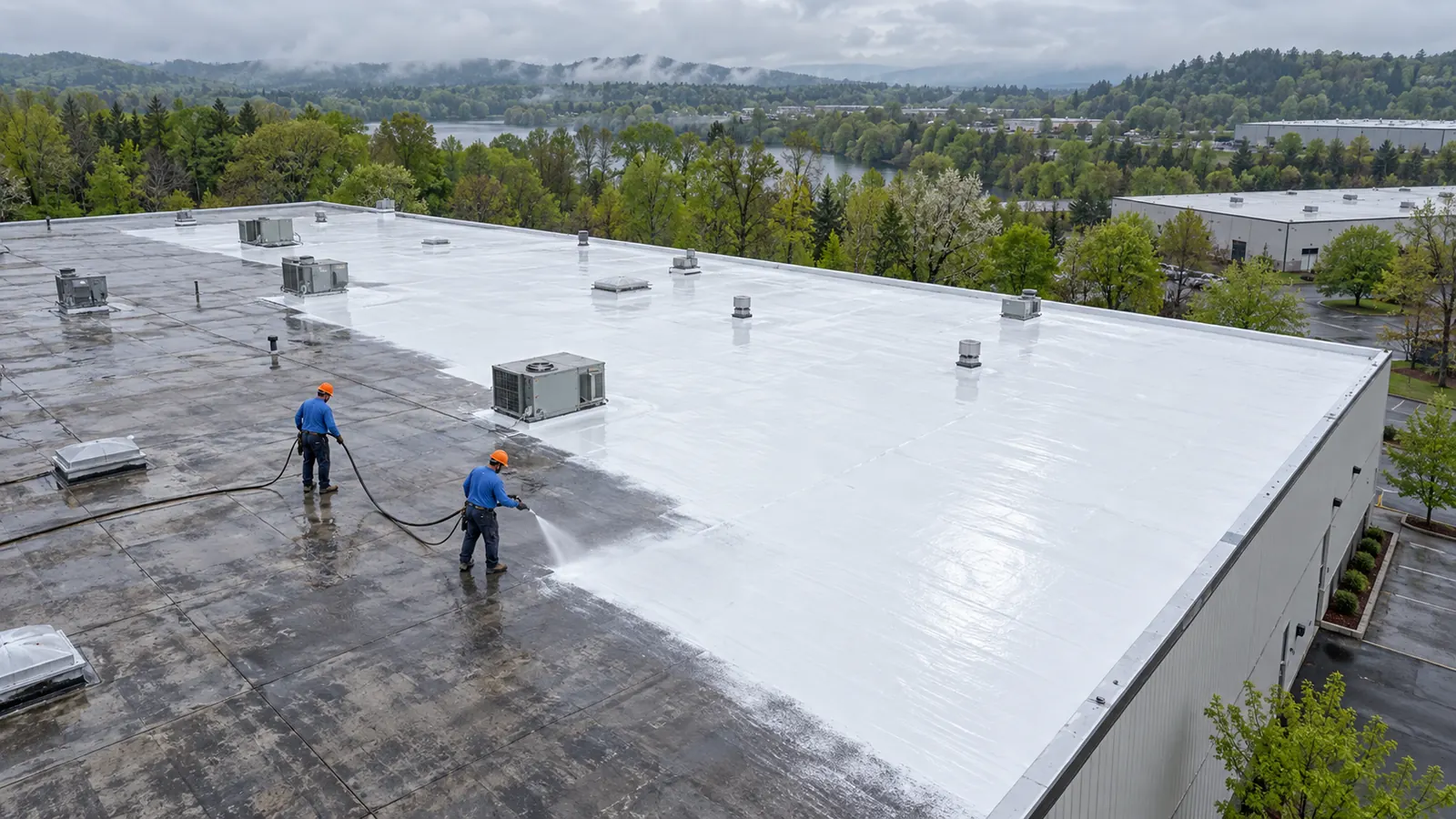
Base and top coats go on during warm, dry hours, with a wet film gauge check and time for each coat to set before dew.
Acrylic covers the pitched panels. These services cover what acrylic should skip.
Low areas, valleys, and canopy backs that hold water get silicone instead of acrylic.
Silicone Roof Coating in Jeffersontown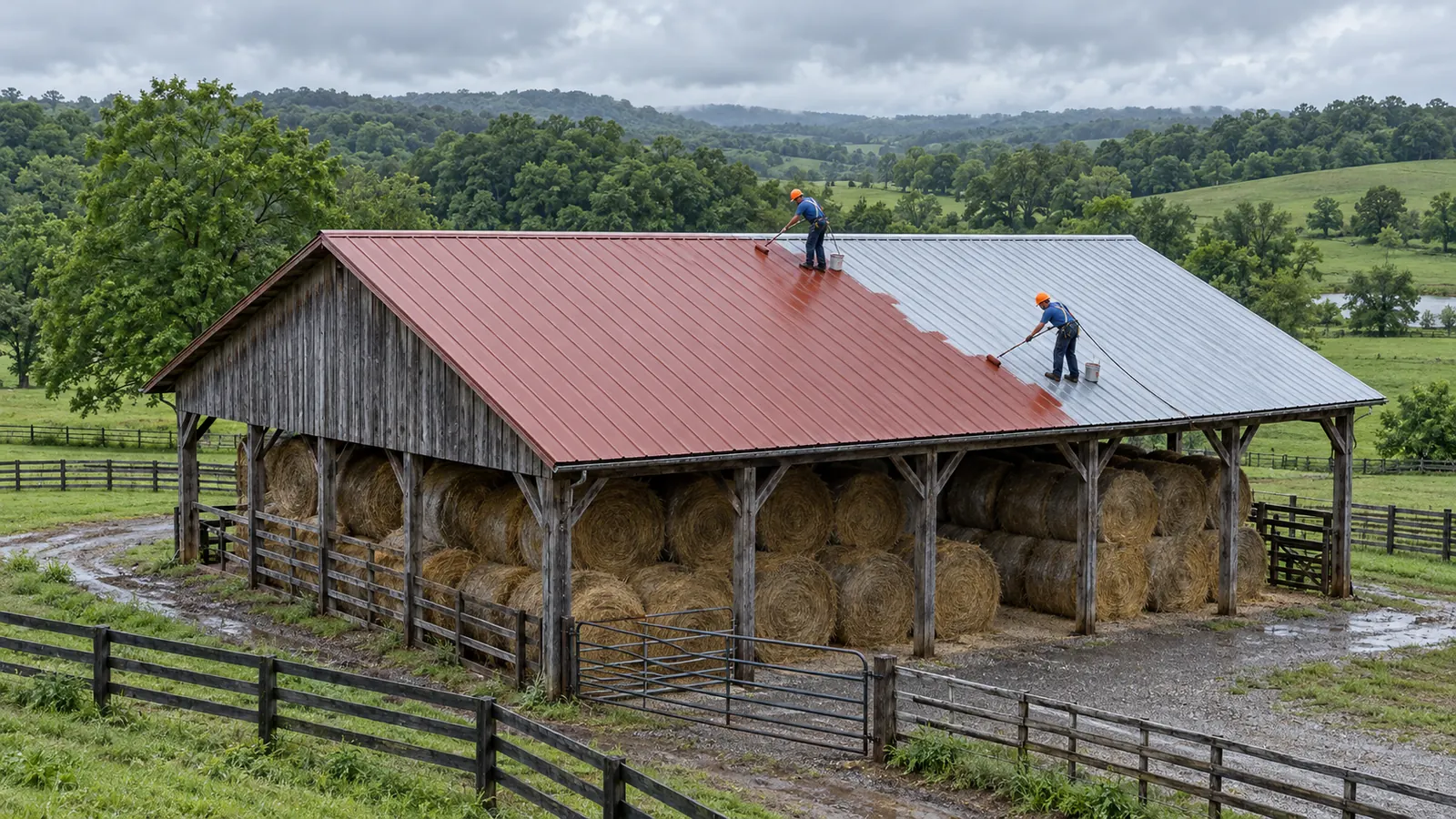
Every acrylic job on steel starts with the screw, lap, and rust work of a metal coating.
Metal Roof Coating in Jeffersontown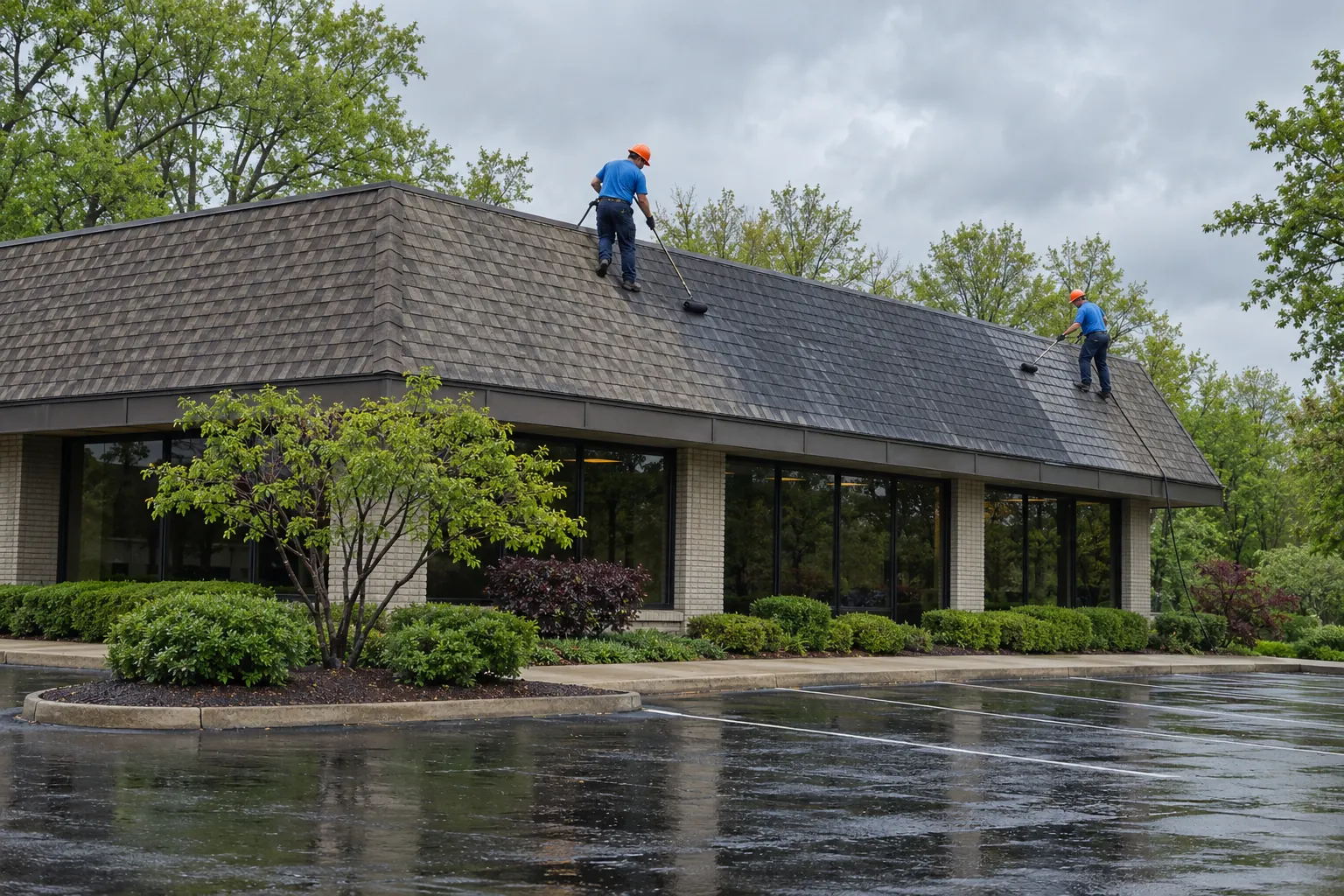
Shingle mansards beside metal roofs can be coated in a matching light color.
Shingle Roof Coating in JeffersontownAnswers about rust prep, weather, and finish for acrylic on Jeffersontown roofs.
Rust is ground or wire brushed back to firm metal and sealed with a rust-inhibiting primer, and only then does the acrylic topcoat go on. A pull test on a small patch confirms adhesion. One manufacturer's system usually covers primer and topcoat, and both names go in the facility records for later recoats.
Yes, after a wash removes the powdery zinc film and a primer matched to galvanized metal goes down. White rust shows up most on flat areas that hold damp debris. We check how much zinc is left, because panels worn to red rust underneath need the red rust treatment instead.
A dry roof, temperatures inside the product's range, and a panel surface above the dew point. Acrylic needs warm, dry hours to cure, so steel that collects dew on cool nights is worked after the sun dries it. Gusts across an open metal roof also carry overspray toward parked cars.
Hail dents the steel, and a flexible coating usually stretches with the dent. The bigger risks are split skylight panels, cracked sealant at laps, and knocked-loose fastener caps. After a storm, walk the roof, photograph dents beside a tape measure for any insurance claim, and get broken spots cleaned and recoated before the next rain.
A white or light coating reflects more sunlight than bare or faded metal, so the panels and the space under them stay cooler on summer afternoons. Results depend on insulation, ductwork above the ceiling, and how the building is cooled. Compare products in the Cool Roof Rating Council directory by rated solar reflectance and thermal emittance.
Yes. Acrylic topcoats come in light grays, tans, and other colors, which helps on roofs seen from the street. Lighter shades reflect more sun than darker ones. Ask for the rated data on the exact color, since reflectance changes from one shade to the next.
Enter the roof size for a quick range, or call to have the slope and panels checked.
Leave a name and number and we will call you back about your commercial roof.
Or call us now: (502) 293-5577